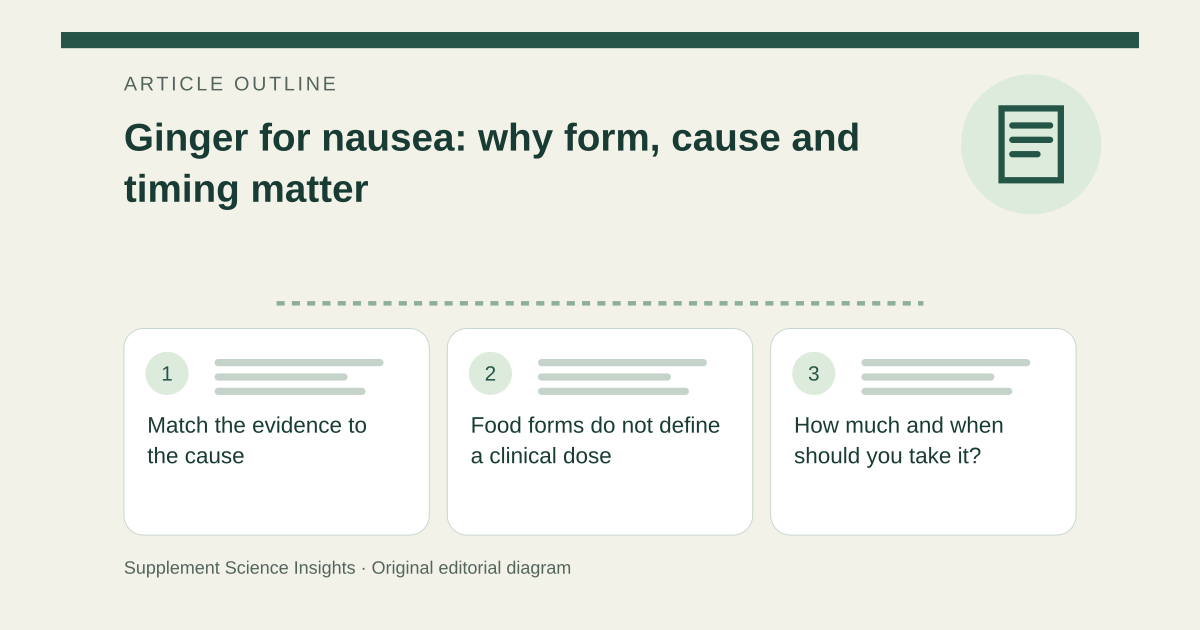
Match the evidence to the cause
NCCIH reports possible benefit for pregnancy-related nausea and vomiting. Most motion-sickness studies have not found benefit, and effects around chemotherapy or surgery remain uncertain. Do not replace prescribed anti-nausea care with ginger because another setting produced a favorable result. [1]
Food forms do not define a clinical dose
Most studies used supplements rather than foods. Tea strength, fresh-root quantity, candies and extracts vary; grams of one cannot be converted reliably into the dose of another without composition details. Ginger flavor alone also does not show how much ginger a serving contains. [1][2]
How much and when should you take it?
The inspected NCCIH summary does not supply one recommended nausea dose or pre-meal schedule. For a supplement, use the exact product directions only after checking suitability for the clinical situation; a label dose is not proof of efficacy. During pregnancy or cancer treatment, ask the care team to select an appropriate preparation and regimen rather than copying a dose from a different trial or an online recipe. [1][2]
A tolerable drink is a self-care option
NHS includes ginger tea among measures that may help ordinary nausea, alongside small regular sips and smaller meals. This is not a requirement to make a strong brew or to consume ginger on an empty stomach. Ginger itself can cause heartburn, abdominal discomfort, diarrhea or mouth irritation; stop an irritating preparation. [3][1]
Know when the question is bigger than ginger
Repeated nausea, persistent vomiting or trouble maintaining fluids needs clinical attention. Sudden nausea with heavy chest pain, spreading pain or shortness of breath requires emergency help. Pregnancy safety and medicine compatibility should be reviewed, and breastfeeding supplement safety remains poorly known. [3][1]
Make a useful comparison
Imagine one person uses weak tea and another takes a standardized extract. Counting both as one serving does not make the exposures comparable. Record the actual product, serving, nausea setting and response before deciding whether it helps or causes discomfort. [1][2]
| Preparation | Limit |
|---|---|
| Tea | Strength and extracted amount vary |
| Candy | Flavor or food quantity is not a trial dose |
| Extract | Composition and directions are product-specific |
| Timing claim | Must fit the condition and evidence |
Sources for this article
- Ginger: Usefulness and Safety | NCCIH
Source consulted: 2026-09-21. This is a reference resource, not a claim that we conducted the studies or tested a product. - Dietary Supplements: What You Need to Know
Source consulted: 2026-09-21. This is a reference resource, not a claim that we conducted the studies or tested a product. - Feeling sick (nausea) - NHS
Source consulted: 2026-09-21. This is a reference resource, not a claim that we conducted the studies or tested a product.