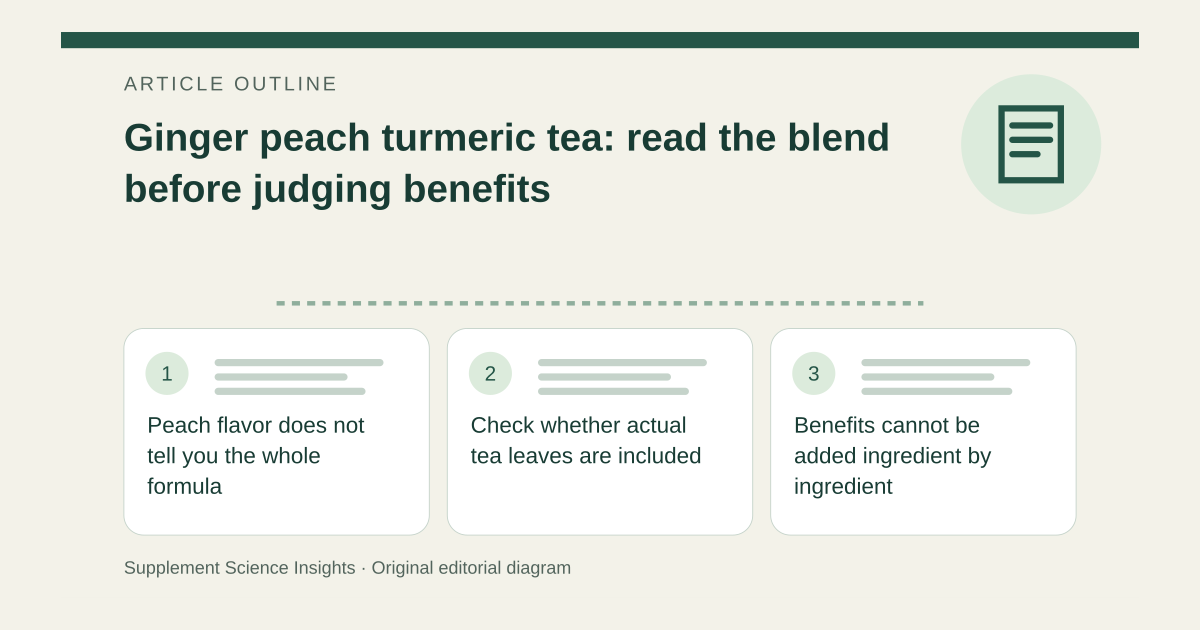
Peach flavor does not tell you the whole formula
A blend may use fruit pieces, flavorings, herbs, black tea or other ingredients. Check the actual list and preparation directions. The name alone does not establish that it supplies a substantial fruit serving or the same exposure as a concentrated botanical supplement. [1][2]
Check whether actual tea leaves are included
Tea made from Camellia sinensis differs from a caffeine-free herbal infusion. A ginger-and-fruit label can appear on either type of blend, so do not infer caffeine status from the flavor. Other caffeine sources also count toward the day’s intake. [3][4]
Benefits cannot be added ingredient by ingredient
NCCIH ginger and turmeric findings concern specific preparations and symptoms. Combining them with peach flavor does not establish greater anti-inflammatory, immune or weight-loss effects. Enjoyment and fluid intake are more modest reasons to choose the drink. [5][6][7]
Use the drink you actually tolerate
Imagine two blends share the same flavor name but one contains black tea and a sweetener while the other is unsweetened herbal tea. Their caffeine and nutrition differ. Follow the package, and reconsider a brew that aggravates heartburn or irritation instead of treating discomfort as evidence of benefit. [5][6][1]
| Difference | Why it matters |
|---|---|
| Tea leaves versus herbs | Caffeine can differ |
| Sweetened versus unsweetened | Nutrition differs |
| Extract versus flavoring | Botanical exposure differs |
Sources for this article
- How to Understand and Use the Nutrition Facts Label | FDA
Source consulted: 2026-09-21. This is a reference resource, not a claim that we conducted the studies or tested a product. - Botanical Dietary Supplements Background Information - Consumer
Source consulted: 2026-09-21. This is a reference resource, not a claim that we conducted the studies or tested a product. - Tea • The Nutrition Source
Source consulted: 2026-09-21. This is a reference resource, not a claim that we conducted the studies or tested a product. - Spilling the Beans: How Much Caffeine is Too Much? | FDA
Source consulted: 2026-09-21. This is a reference resource, not a claim that we conducted the studies or tested a product. - Ginger: Usefulness and Safety | NCCIH
Source consulted: 2026-09-21. This is a reference resource, not a claim that we conducted the studies or tested a product. - Turmeric: Usefulness and Safety | NCCIH
Source consulted: 2026-09-21. This is a reference resource, not a claim that we conducted the studies or tested a product. - Water, drinks and hydration - NHS
Source consulted: 2026-09-21. This is a reference resource, not a claim that we conducted the studies or tested a product.