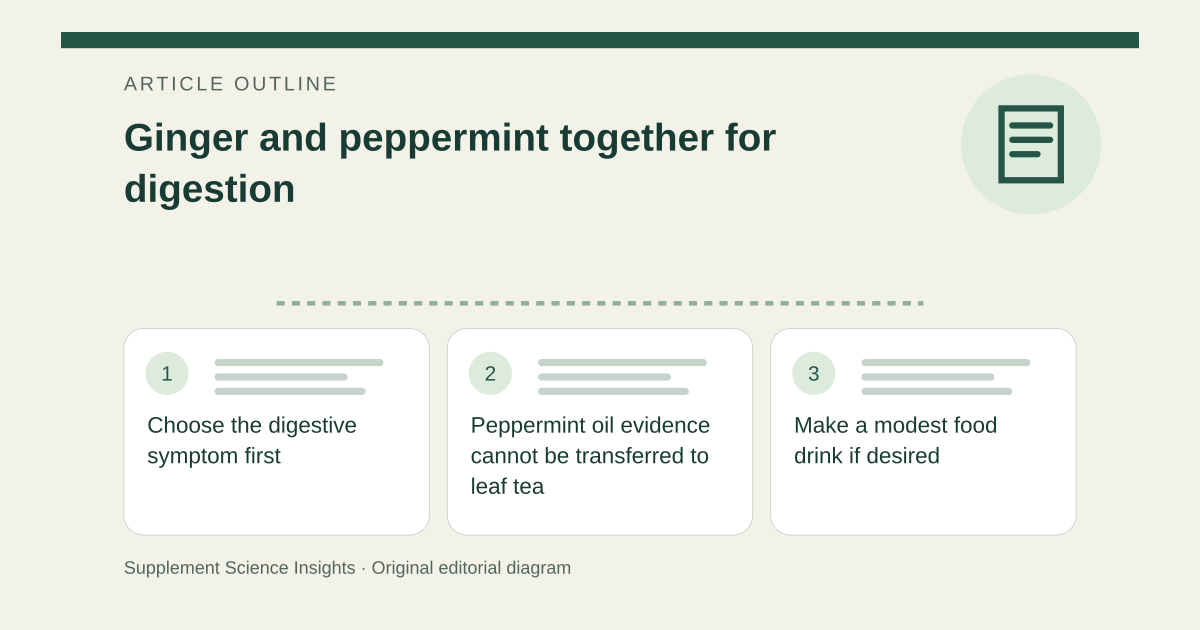
Choose the digestive symptom first
Nausea, bloating, reflux and constipation are different problems. NHS lists ginger or peppermint tea as possible nausea self-care, while NCCIH describes ginger evidence that varies by cause. Persistent symptoms need more than choosing a stronger brew. [1][2]
Peppermint oil evidence cannot be transferred to leaf tea
Some enteric-coated peppermint-oil products help overall IBS symptoms, but peppermint leaf has much less clinical research. Oil can cause reflux or indigestion. Do not add essential-oil drops to a drink to imitate a capsule trial. [3]
Make a modest food drink if desired
As an original culinary option, steep a little clean sliced ginger with peppermint leaves or a commercial tea bag in hot water according to food-package directions, then strain and cool to a comfortable temperature. This is a flavor suggestion, not a prescribed digestive dose. [4][3]
A combined drink can still worsen symptoms
Imagine nausea feels better but heartburn increases. Stop or change the irritating drink rather than assuming the combination must help all digestion. Neither ginger tea nor peppermint tea is established here as a universal constipation treatment. [2][3]
| Problem | Evidence distinction |
|---|---|
| Nausea | Cause and ginger preparation |
| IBS symptoms | Specific peppermint-oil products |
| Reflux | Either preparation may aggravate |
| Constipation | Different treatment question |
Sources for this article
- Feeling sick (nausea) - NHS
Source consulted: 2026-09-21. This is a reference resource, not a claim that we conducted the studies or tested a product. - Ginger: Usefulness and Safety | NCCIH
Source consulted: 2026-09-21. This is a reference resource, not a claim that we conducted the studies or tested a product. - Peppermint Oil: Usefulness and Safety | NCCIH
Source consulted: 2026-09-21. This is a reference resource, not a claim that we conducted the studies or tested a product. - Storing Food for Safety and Quality — Pacific Northwest Extension PNW612
Source consulted: 2026-09-21. This is a reference resource, not a claim that we conducted the studies or tested a product.