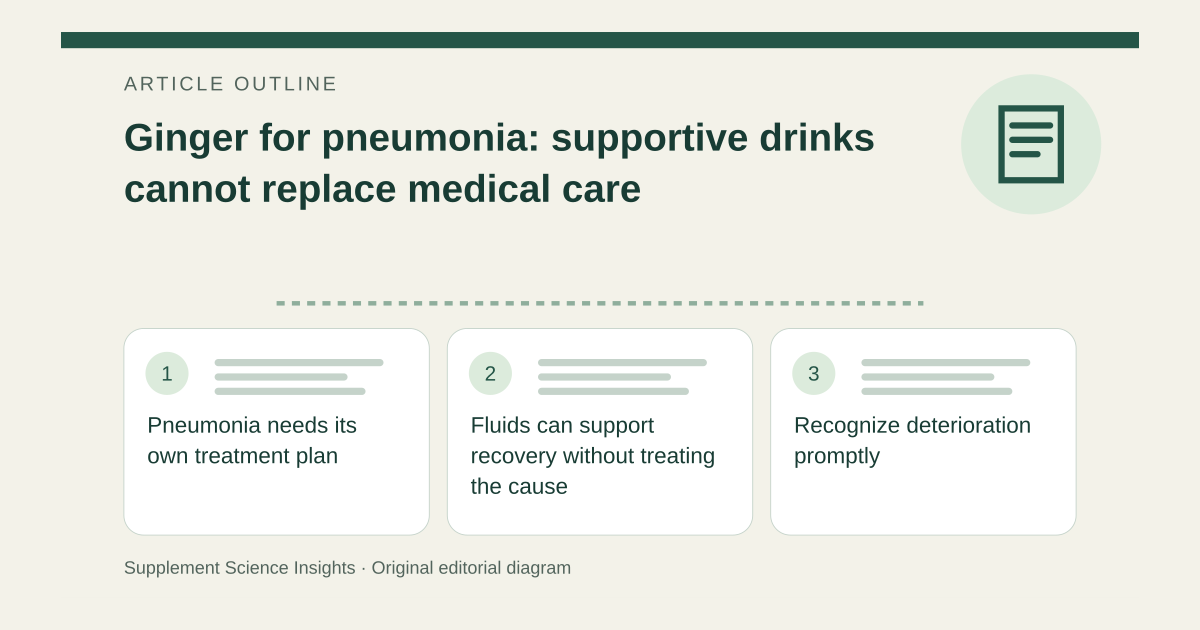
Pneumonia needs its own treatment plan
NHS describes pneumonia as lung inflammation usually due to infection. Bacterial cases generally receive antibiotics, while severe illness and higher-risk patients may need hospital care. Ginger’s nausea research does not establish treatment for a lung infection. [1][2]
Fluids can support recovery without treating the cause
Rest and adequate fluids are part of NHS recovery advice. If a ginger-flavored drink is comfortable, that is a fluid choice rather than an antimicrobial prescription. Tell the treating clinician about supplements used alongside medicines. [1][2]
Recognize deterioration promptly
Seek urgent assessment for breathlessness or chest pain with breathing. Severe difficulty breathing, blue or unusually pale lips or skin, or sudden confusion calls for emergency help. If prescribed antibiotics are not helping after two to three days, contact the clinician. [1]
Do not interpret warmth as lung recovery
Imagine a drink eases throat irritation while breathlessness increases. The worsening breathing is the important change; stop relying on the comfort response and seek the appropriate level of care. [1]
| Situation | Implication |
|---|---|
| Comfortable drink | Supportive fluid choice |
| Bacterial pneumonia | Clinician-directed antibiotics |
| Severe breathing difficulty | Emergency assessment |
Sources for this article
- Pneumonia - NHS
Source consulted: 2026-09-20. This is a reference resource, not a claim that we conducted the studies or tested a product. - Ginger: Usefulness and Safety | NCCIH
Source consulted: 2026-09-20. This is a reference resource, not a claim that we conducted the studies or tested a product.