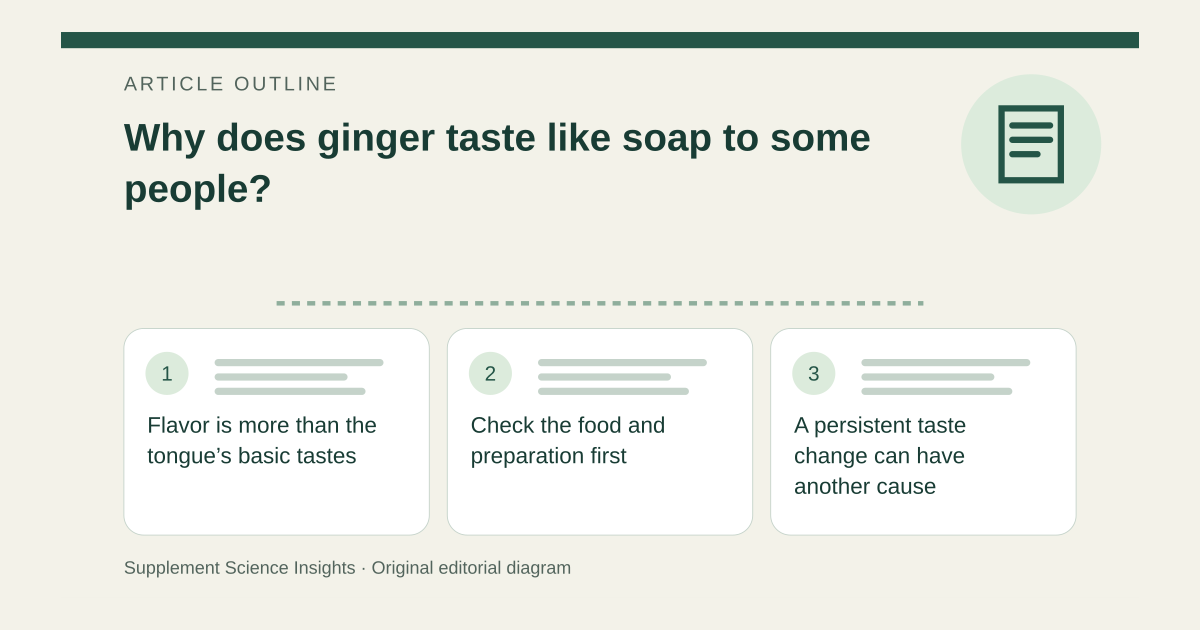
Flavor is more than the tongue’s basic tastes
NIDCD explains that smell, taste, texture and the common chemical sense combine during eating. Ginger’s pungency is therefore not just a sweet-or-bitter signal. A soapy description does not identify a particular gene or prove an allergy. [1][2]
Check the food and preparation first
Do not taste-test suspected cleaning contamination. FDA recommends washing produce with running water rather than soap or detergent. Use clean, well-rinsed utensils and discard spoiled material. Ginger in a processed drink may also be accompanied by other flavorings. [3]
A persistent taste change can have another cause
NIDCD lists infections, medicines, dental problems and other causes of taste disturbance. If many foods suddenly taste strange or the sensation persists when not eating, seek assessment. Do not stop prescribed medicines without advice. [1]
Distinguish preference from a new symptom
Imagine ginger has always seemed perfumed to one person while another likes it. That alone need not be a disorder. A new soapy taste after an illness or medication change is a different situation and merits a history-based review. [1]
| Pattern | Consideration |
|---|---|
| Only ginger, lifelong | Personal flavor perception |
| One washed batch | Possible handling issue |
| Many foods newly altered | Taste/smell change |
| Rash or swelling too | Not explained by taste preference |
Sources for this article
- Taste Disorders | NIDCD
Source consulted: 2026-09-21. This is a reference resource, not a claim that we conducted the studies or tested a product. - Ginger: Usefulness and Safety | NCCIH
Source consulted: 2026-09-21. This is a reference resource, not a claim that we conducted the studies or tested a product. - Selecting and Serving Produce Safely | FDA
Source consulted: 2026-09-21. This is a reference resource, not a claim that we conducted the studies or tested a product.