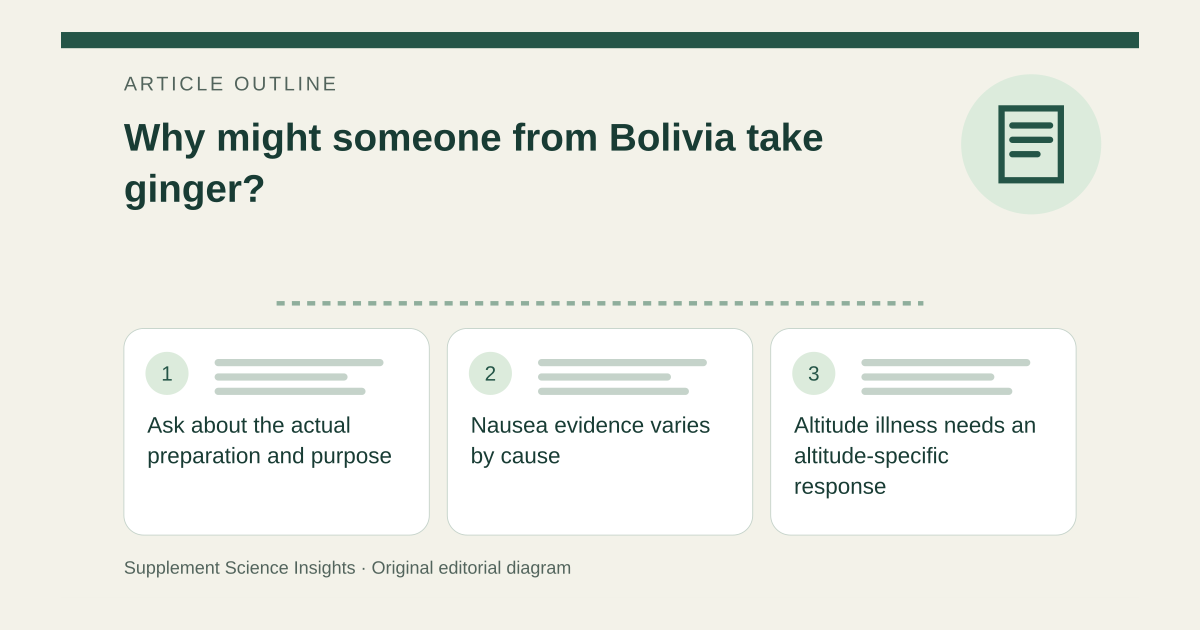
Ask about the actual preparation and purpose
Fresh ginger in a meal, a tea and a concentrated capsule are different uses. The relevant questions are what the person takes, why and how they feel afterward. Do not infer a shared medical belief from citizenship or place of birth. [1][2]
Nausea evidence varies by cause
NCCIH describes possible benefit in pregnancy nausea, mostly from supplement studies, while findings in other settings differ. Those results do not establish treatment for every stomach symptom or for illness caused by low oxygen at elevation. [1]
Altitude illness needs an altitude-specific response
CDC lists headache, nausea, appetite loss and fatigue among acute mountain-sickness symptoms. A person with symptoms should not continue to a higher elevation. Worsening while resting requires descent; confusion, loss of coordination or breathing difficulty can indicate a dangerous form of altitude illness. [3]
Use context without inventing a tradition
Imagine a traveler sees someone drink ginger tea in a high-altitude city. It may simply be a preferred drink. If the traveler is ill after ascent, that observation is not evidence that the tea is the appropriate treatment. [3][1]
| Observation | What remains unknown |
|---|---|
| Person is Bolivian | Individual reason for ginger |
| Ginger tea | Culinary or medicinal intent |
| Nausea after ascent | Possible altitude illness |
| Temporary comfort | Not proof of recovery |
Sources for this article
- Ginger: Usefulness and Safety | NCCIH
Source consulted: 2026-09-21. This is a reference resource, not a claim that we conducted the studies or tested a product. - Dietary Supplements: What You Need to Know
Source consulted: 2026-09-21. This is a reference resource, not a claim that we conducted the studies or tested a product. - Travel to High Altitudes | Travelers' Health | CDC
Source consulted: 2026-09-21. This is a reference resource, not a claim that we conducted the studies or tested a product.