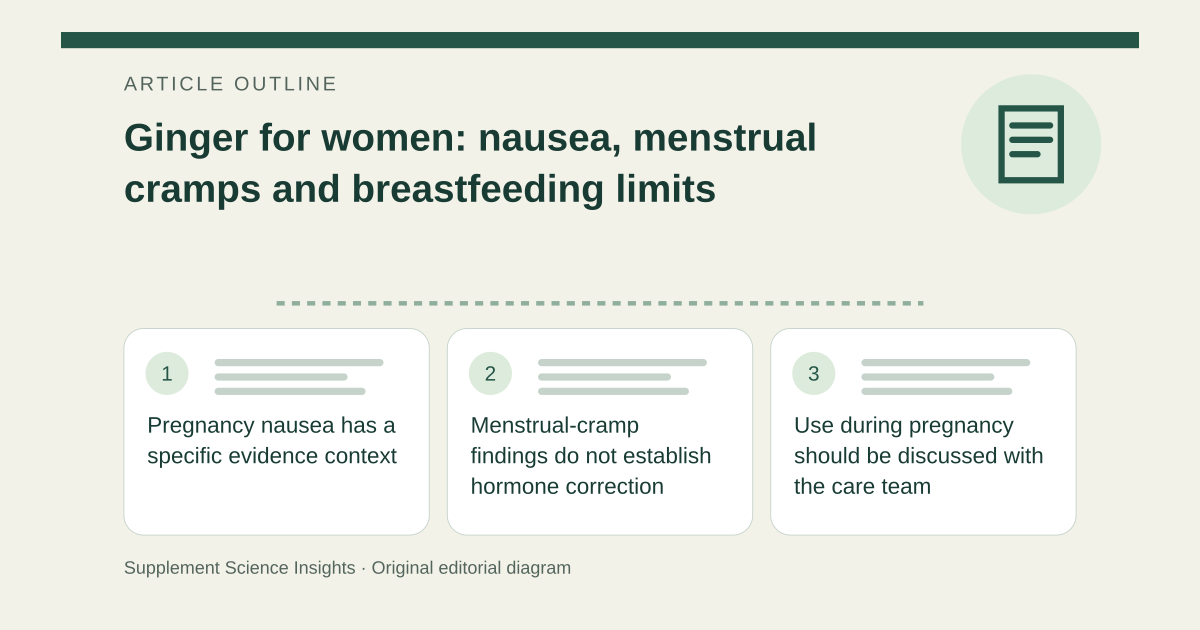
Pregnancy nausea has a specific evidence context
NCCIH reports that ginger may help nausea and vomiting associated with pregnancy. Most research used supplements rather than ordinary foods. This does not mean every tea, candy or shot supplies a studied amount, or that persistent vomiting should be managed only with ginger. [1]
Menstrual-cramp findings do not establish hormone correction
NCCIH reports that ginger supplements might reduce menstrual-cramp severity. That is a symptom outcome, not proof that ginger increases fertility, normalizes estrogen or treats every gynecological condition. Keep the claimed benefit tied to the question actually studied. [1]
Use during pregnancy should be discussed with the care team
The agency considers supplement use potentially safe in pregnancy but advises consulting the clinician. Preparation, medicines and symptoms affect the decision. A familiar food ingredient should not be treated as permission to use any concentrated amount. [1][2]
Breastfeeding remains a separate uncertainty
NCCIH says little is known about ginger safety during breastfeeding. The pregnancy findings cannot supply a universally safe medicinal tea strength or supplement dose for lactation. Discuss intended medicinal use rather than assuming that a stronger brew improves milk supply or benefits the infant. [1]
Monitor tolerance rather than interpreting irritation as efficacy
Heartburn, abdominal discomfort, diarrhea and mouth or throat irritation can occur. Imagine a soothing drink becomes a strong repeated shot and causes burning: the new exposure deserves reassessment, not reassurance from the ingredient’s reputation. [1]
| Reason | Evidence boundary |
|---|---|
| Pregnancy nausea | Condition-specific findings; discuss preparation |
| Menstrual cramps | Possible symptom relief, not hormone normalization |
| Breastfeeding tea | No universal medicinal dose established |
Sources for this article
- Ginger: Usefulness and Safety | NCCIH
Source consulted: 2026-09-21. This is a reference resource, not a claim that we conducted the studies or tested a product. - Botanical Dietary Supplements Background Information - Consumer
Source consulted: 2026-09-21. This is a reference resource, not a claim that we conducted the studies or tested a product.