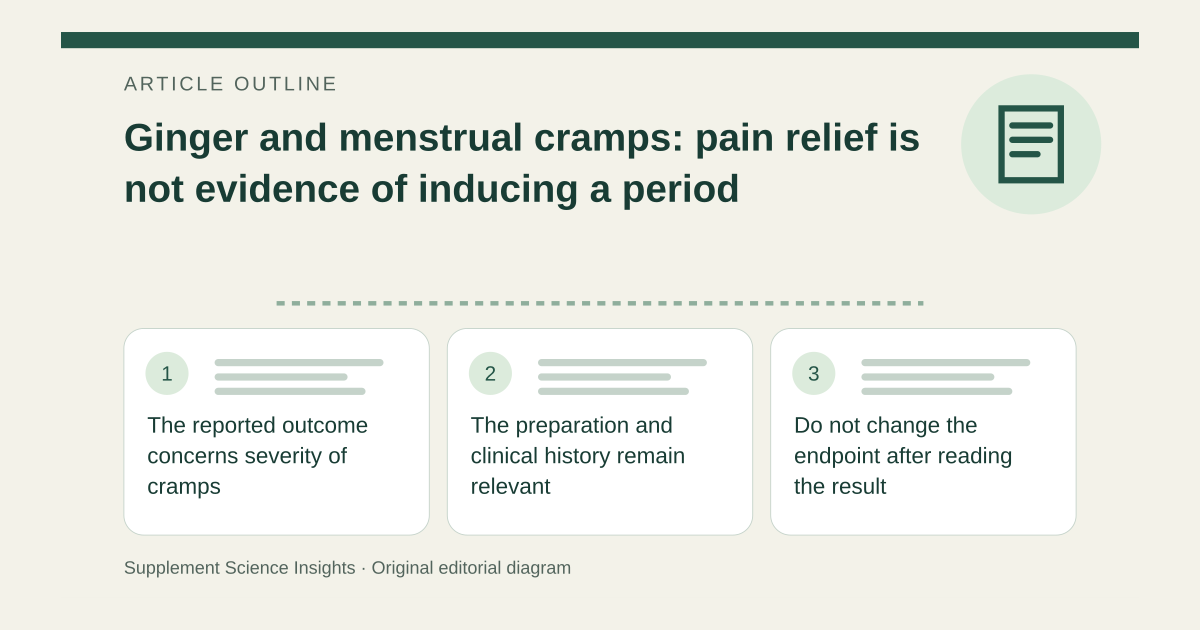
The reported outcome concerns severity of cramps
NCCIH describes research suggesting ginger supplements may reduce menstrual-cramp severity. This is a symptom outcome in a particular setting, not proof of an effect on every process involved in the menstrual cycle. [1]
A claim that ginger induces a period would require evidence about the onset or timing of bleeding. A pain score cannot supply that information. Findings for menstrual cramps also should not be applied automatically to leg cramps or abdominal pain of another cause. [1]
The preparation and clinical history remain relevant
A supplement studied for cramps does not establish the same exposure in a tea or food recipe. Review the actual product and medicines if considering use, especially when symptoms are new, persistent or otherwise need assessment. [1]
NCCIH notes digestive adverse effects with oral ginger and uncertainty about some populations. A possible symptom benefit should not be converted into a method for managing a missed period, diagnosing its cause or deliberately triggering bleeding. [1]
Do not change the endpoint after reading the result
Imagine a study reports less severe pain during menstruation but does not measure when the period began. Describing it as a study that started periods would add an unmeasured outcome. The fair account retains pain severity as the result.
| Question | What matters |
|---|---|
| Cramp intensity | A symptom measure |
| Cycle timing | A separate outcome |
| Cause of a missed period | Not answered by a pain trial |
Sources for this article
- NCCIH: Ginger
Source consulted: 2026-09-17. This is a reference resource, not a claim that we conducted the studies or tested a product.