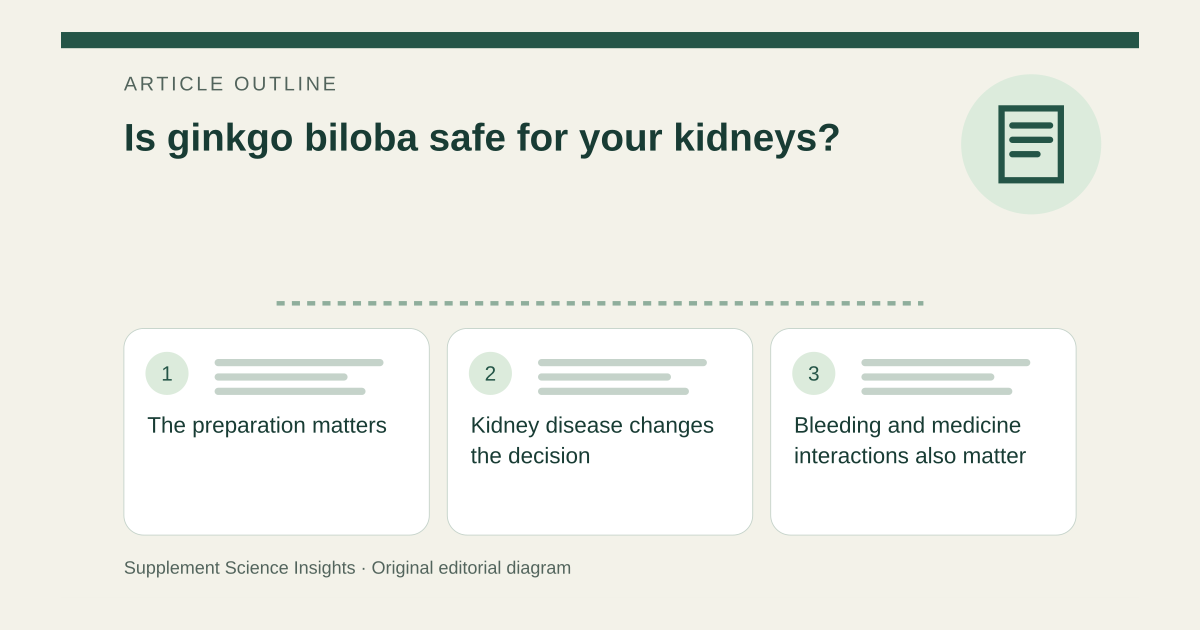
The preparation matters
NCCIH distinguishes studied leaf extracts from seeds and crude plant material that can be toxic. A homemade preparation or multi-ingredient supplement should not inherit the safety assumptions of a particular standardized extract. [1]
Kidney disease changes the decision
The National Kidney Foundation advises caution with herbal supplements because of disease-related risks, interactions and product uncertainty. A kidney-care team can assess the actual preparation alongside kidney function and prescribed treatment. [2]
Bleeding and medicine interactions also matter
Ginkgo may increase bleeding risk with anticoagulants and can interact with other medicines. Those concerns remain relevant even if the main question is kidney safety. Include over-the-counter medicines and all supplements in the review. [1]
Ask a product-specific question
Imagine a person with chronic kidney disease wants ginkgo for memory. Bring the full label to the kidney clinician or pharmacist and discuss the intended benefit and alternatives. Do not replace prescribed kidney treatment or infer protection from antioxidant marketing. [2][1]
| Question | Interpretation |
|---|---|
| Healthy-adult study | Not CKD-specific assurance |
| Leaf versus seed | Different safety profiles |
| Blood thinner | Interaction review |
| Kidney treatment | Do not substitute ginkgo |
Sources for this article
- Ginkgo: Usefulness and Safety | NCCIH
Source consulted: 2026-09-21. This is a reference resource, not a claim that we conducted the studies or tested a product. - “Kidney Detox” and Herbal Supplements: What’s Safe and What’s Not | National Kidney Foundation
Source consulted: 2026-09-21. This is a reference resource, not a claim that we conducted the studies or tested a product.