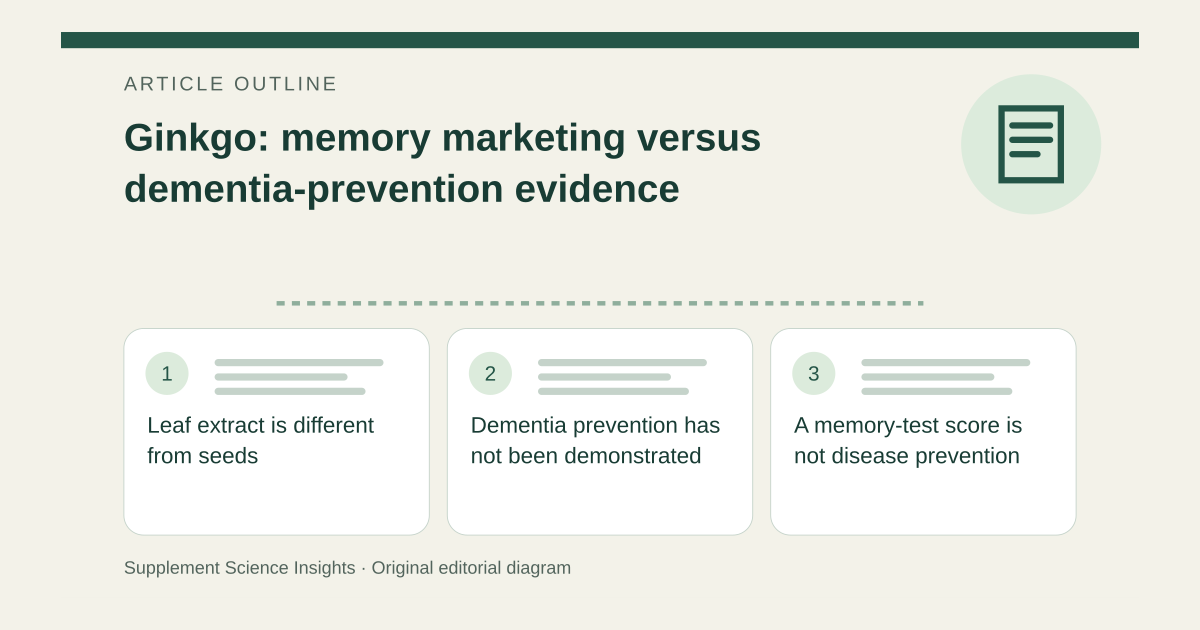
Leaf extract is different from seeds
Ginkgo biloba supplements generally involve leaf extracts. Fresh seeds, roasted seeds and crude plant material have different safety concerns and should not be treated as substitutes for a researched extract. The species name does not make every part of the plant an equivalent exposure. [1]
A memory claim should identify the leaf preparation and the population studied. Research in people with diagnosed dementia, mild cognitive impairment and normal cognition asks different questions. [1]
Dementia prevention has not been demonstrated
NCCIH reports that large studies did not find reduced dementia risk with ginkgo supplementation. Its summary includes a long trial in older adults that compared ginkgo with placebo and found no difference in dementia or Alzheimer’s disease incidence. [1]
Some research suggests a modest effect on symptoms in established dementia, but findings are inconsistent. That is different from preventing dementia or slowing its underlying progression. Evidence about cognitive performance in healthy people is uncertain and often low quality. [1]
A memory-test score is not disease prevention
A short cognitive task measures performance under particular conditions. It cannot by itself establish maintained independence, better daily functioning or a lower chance of developing dementia years later. Those outcomes need appropriate follow-up and direct measurement.
Also consider practice effects: a person may improve when repeating a familiar test. A credible comparison helps separate that possibility from an intervention effect. A product description that moves from a laboratory mechanism to a prevention promise has skipped several essential evidentiary steps.
Bleeding interactions and toxic plant parts matter
Leaf extracts are often tolerated, but dizziness, headache and gastrointestinal symptoms can occur. Ginkgo may increase bleeding risk with anticoagulants such as warfarin and may interact with other medicines. Discuss the actual product and treatment list with a pharmacist or clinician. [1]
Fresh seeds are toxic, and serious adverse effects have also occurred after roasted seeds or crude plant material. Pregnancy use may be unsafe, including concerns around delivery; breastfeeding information is limited. Safety findings for one extract cannot be generalized to other plant parts. [1]
Separate two questions in a study summary
Imagine a fictional eight-week trial finds a small improvement on one memory test but does not track dementia diagnoses. Its result concerns that test over eight weeks. It provides no direct estimate of dementia prevention.
A different trial measuring new diagnoses over years would answer a different question, even if both products were called ginkgo. Duration and outcome belong in the headline interpretation.
| Hypothetical endpoint | Supported scope |
|---|---|
| Eight-week memory score | Short-term test performance |
| Dementia diagnoses not measured | No prevention conclusion |
| Different population | Requires a separate applicability assessment |
Do not let a broad label obscure a negative result
Brain-health language should not erase the unsuccessful prevention evidence. This overview does not recommend ginkgo for cognitive symptoms. New memory difficulties warrant assessment rather than a supplement chosen solely from a familiar marketing category.
Sources for this article
- NCCIH — Ginkgo: Usefulness and Safety
Source consulted: 2026-09-17. This is a reference resource, not a claim that we conducted the studies or tested a product.