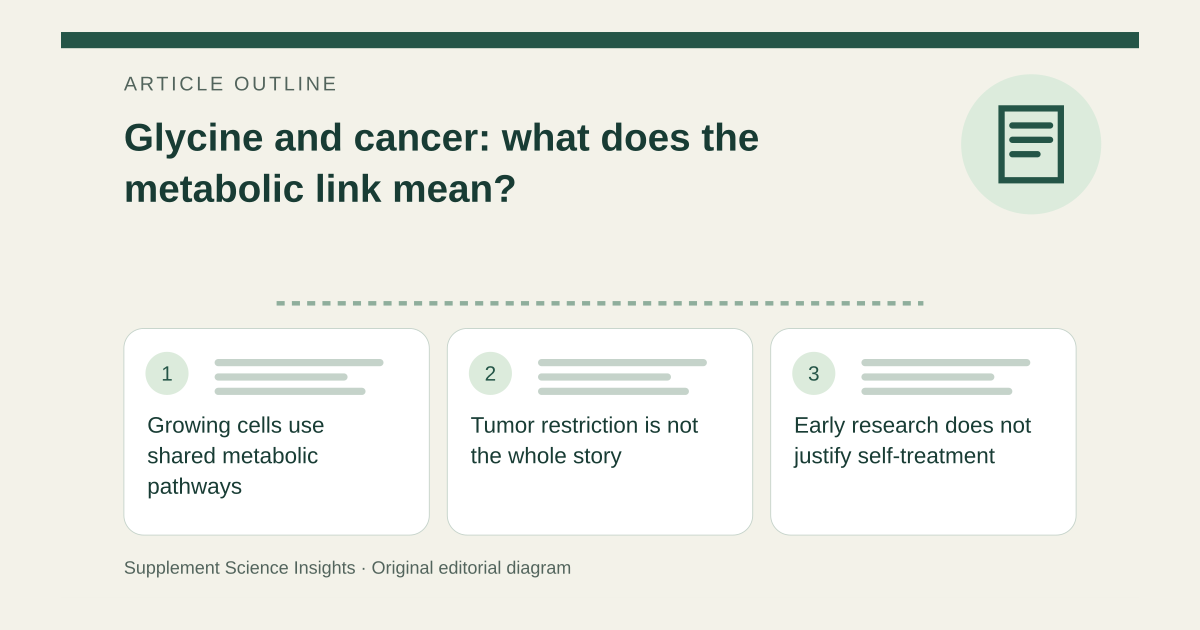
Growing cells use shared metabolic pathways
Serine and glycine are interconvertible and contribute to one-carbon metabolism, which supports nucleotide production and other cellular functions. Tumors may alter these pathways to sustain growth. Identifying that dependence creates a research target, not a direct rule about the cancer risk of an individual food. [1]
Tumor restriction is not the whole story
The review discusses serine-and-glycine restriction, enzyme inhibition and combinations with other therapies. Responses depend on tumor biology and metabolic adaptation. Immune cells also need these pathways, so changing nutrient supply can have effects beyond the tumor. [1]
Early research does not justify self-treatment
Much of the evidence is from laboratory or animal models, with limited early clinical translation. Neither a high-dose supplement nor a restrictive diet has a universally established role in cancer treatment. The reviewed metabolic mechanisms do not establish that routine food intake initiates cancer. [1]
Review a supplement in the actual treatment context
Imagine a person receiving cancer therapy reads that glycine supports glutathione and considers adding it. Discuss the product and purpose with the oncology team. A biochemical rationale cannot predict whether the intervention helps that patient or interferes with nutritional and treatment goals. [1][2]
| Finding | What it does not prove |
|---|---|
| Tumor uses glycine | Food glycine causes cancer |
| Pathway inhibitor works in cells | Diet restriction treats people |
| Antioxidant mechanism | Supplement improves survival |
| Early clinical research | Universal treatment recommendation |
Sources for this article
- Frontiers | Recent progress in serine metabolism reprogramming in tumors and strategies for serine deprivation
Source consulted: 2026-09-21. This is a reference resource, not a claim that we conducted the studies or tested a product. - Dietary Supplements: What You Need to Know
Source consulted: 2026-09-21. This is a reference resource, not a claim that we conducted the studies or tested a product.