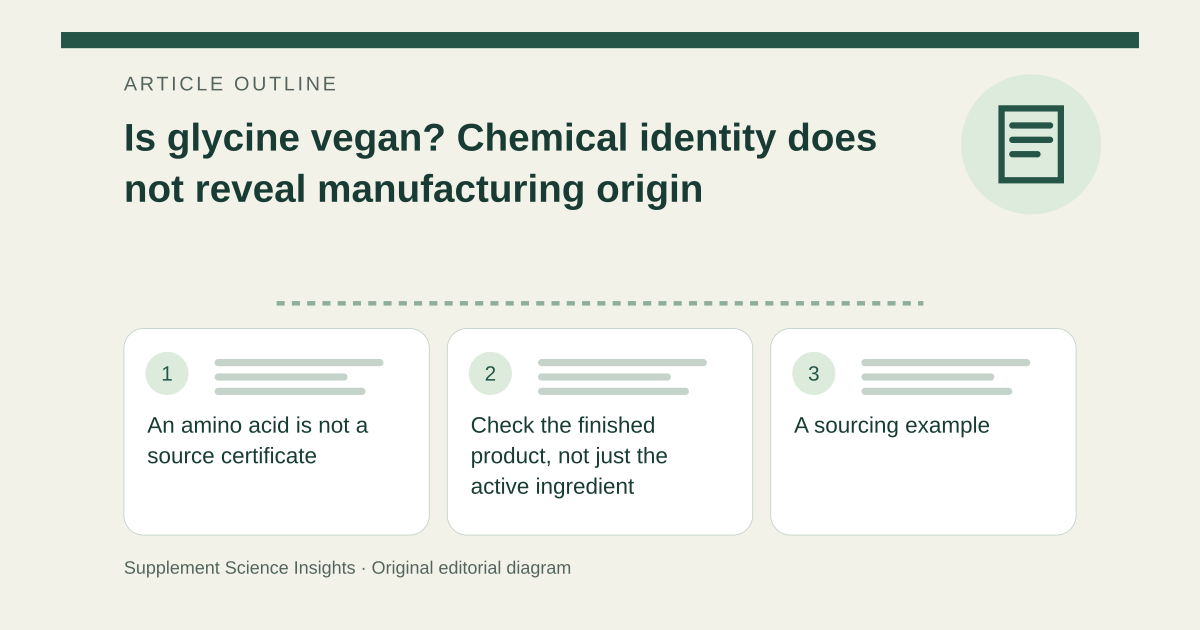
An amino acid is not a source certificate
PubChem identifies glycine as the compound C2H5NO2. That chemical formula does not identify whether a particular commercial batch used animal-derived inputs or a different manufacturing route. Dietary amino acids occur in both animal and plant protein contexts, so the name of the amino acid is not a complete sourcing statement. [1][2]
Check the finished product, not just the active ingredient
Ask the manufacturer to confirm the glycine production source and any processing requirements important to your definition of vegan. Inspect capsule materials, flavors and other ingredients as well. An animal-free active ingredient would not by itself establish that an entire capsule product meets the same standard. [1]
A sourcing example
Imagine a powder label lists only glycine but makes no vegan statement, while a capsule lists additional materials. The first still needs source confirmation if that matters to you; the second needs both active-ingredient and capsule checks. A verified sourcing declaration answers a dietary-preference question, not whether the supplement has a useful clinical effect. [1]
| Hypothetical evidence | What it answers |
|---|---|
| Chemical formula | Molecular identity |
| Manufacturer source confirmation | Production-origin question |
| Complete formula review | Suitability of the finished product |
Sources for this article
- Glycine | C2H5NO2 | CID 750 - PubChem
Source consulted: 2026-09-20. This is a reference resource, not a claim that we conducted the studies or tested a product. - Protein in diet: MedlinePlus Medical Encyclopedia
Source consulted: 2026-09-20. This is a reference resource, not a claim that we conducted the studies or tested a product.