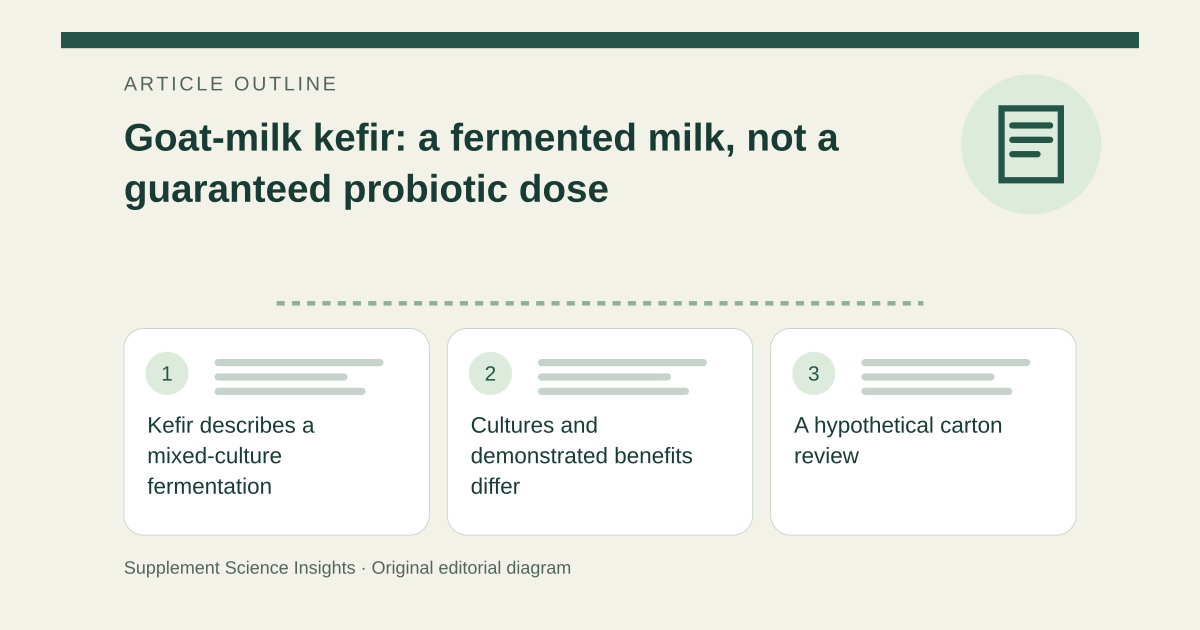
Kefir describes a mixed-culture fermentation
The Codex fermented-milk standard describes kefir starters as including a community of bacteria and yeasts associated with kefir grains. The goat-milk description identifies the milk source. It does not make the product plant-based or establish that all kefirs have identical microbes. [1]
Cultures and demonstrated benefits differ
A fermented milk can contain viable starter cultures without being a tested probiotic treatment for a particular condition. Heat treatment after fermentation changes the live-culture question. ODS emphasizes organism-specific evidence rather than transferring a finding about one preparation to every product sharing a food name. [1][2]
A hypothetical carton review
Imagine a carton identifies goat milk, cultures and storage instructions. That tells you its source and handling requirements. If it also claims a digestive benefit, seek the specified strain, viable amount and relevant evidence. Neither the animal source nor the word kefir establishes a universal dose or suitability for every milk-related problem. [2]
| Hypothetical label term | What it establishes |
|---|---|
| Goat milk | Dairy source |
| Kefir cultures | Fermentation identity |
| Specific probiotic claim | Requires additional organism and evidence details |
Sources for this article
- Codex CXS243-2003: Standard for Fermented Milks, amended2024
Source consulted: 2026-09-20. This is a reference resource, not a claim that we conducted the studies or tested a product. - Probiotics - Health Professional Fact Sheet
Source consulted: 2026-09-20. This is a reference resource, not a claim that we conducted the studies or tested a product.