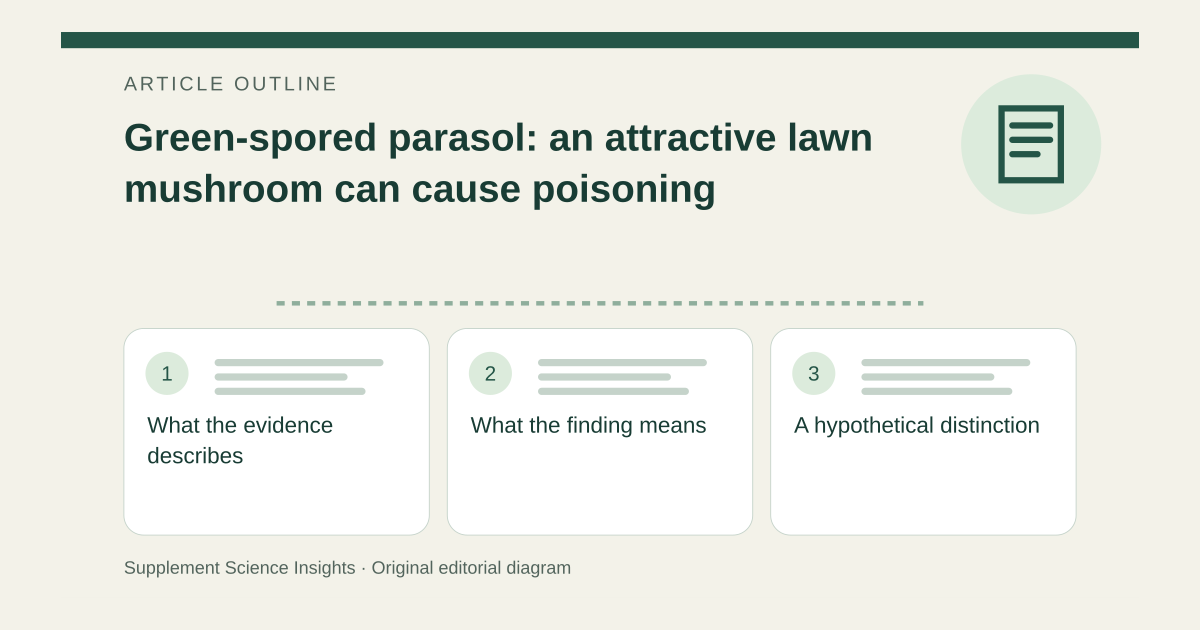
What the evidence describes
University of Florida Extension describes a large, often scaly mushroom found in lawns and other grassy settings, sometimes in rings. Gills that begin pale can become greenish as spores mature. [1]
Ingestion can cause vomiting, diarrhea and substantial fluid loss. Severity varies, so one person’s past uneventful meal does not establish that another specimen or another person will be safe. [1]
What the finding means
The account is a warning about a named poisonous species, not a complete identification key. Young specimens may not display the mature color someone expects. Do not use one photograph, ring-shaped growth or a common name as permission to eat a wild mushroom. [1]
A hypothetical distinction
Imagine an identification shortcut depends on mature green gills. A younger specimen can fail that shortcut without becoming safe.
| Detail | Interpretation |
|---|---|
| Finding | Preserve the measured or observed outcome |
| Context | Species, preparation or setting matters |
| Limit | No universal safety or benefit guarantee |
Sources for this article
- PP324/PP324: The Green-Spore Poison Parasol Mushroom, Chlorophyllum molybdites
Source consulted: 2026-09-19. This is a reference resource, not a claim that we conducted the studies or tested a product.