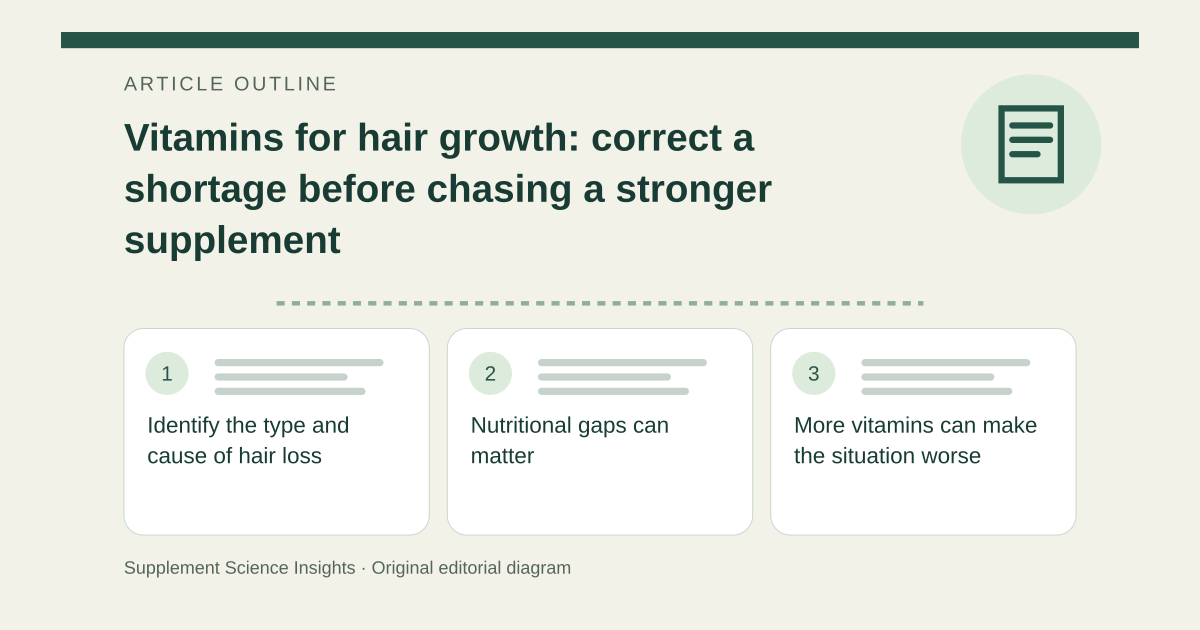
Identify the type and cause of hair loss
The American Academy of Dermatology describes history, scalp examination and selected testing to distinguish possible causes, including illness, hormonal problems, infection and nutrient deficiency. A widening part, sudden shedding and scalp inflammation can require different plans. Buying a hair blend does not establish the diagnosis. [1]
Nutritional gaps can matter
AAD advises targeted biotin, iron or zinc supplementation when testing shows a deficiency, and improving protein intake when inadequate. Eating too few calories or too little protein can contribute to hair loss. The aim is adequate nutrition, not the highest available dose of a single nutrient. [1][2]
More vitamins can make the situation worse
AAD links excessive selenium and vitamins A or E with hair loss. Check all multivitamins, hair gummies and other blends together to avoid duplication. A product marketed for hair is not exempt from the risks of excess intake. [2]
Established treatment may be more relevant than supplementation
For suitable types of hair loss, minoxidil can help maintain hair or stimulate regrowth, but results take months and continued use is often needed. Other diagnoses require different treatment. No vitamin can be assumed to produce rapid thickening or substitute for the appropriate dermatologic plan. [1]
Build the decision around the finding
Imagine a person with normal nutrient testing adds several hair supplements while their part continues widening. Review the diagnosis and treatment options with a dermatologist. If a deficiency is identified instead, correct it and ask how progress will be assessed rather than expecting a universal regrowth deadline. [1][2]
| Question | Practical implication |
|---|---|
| Documented nutrient deficiency | Targeted correction |
| Normal nutrient status | More is not automatically useful |
| Persistent or patterned loss | Discuss diagnosis-specific treatment |
Sources for this article
- Hair loss: Diagnosis and treatment
Source consulted: 2026-09-20. This is a reference resource, not a claim that we conducted the studies or tested a product. - Hair loss: Tips for managing
Source consulted: 2026-09-20. This is a reference resource, not a claim that we conducted the studies or tested a product.