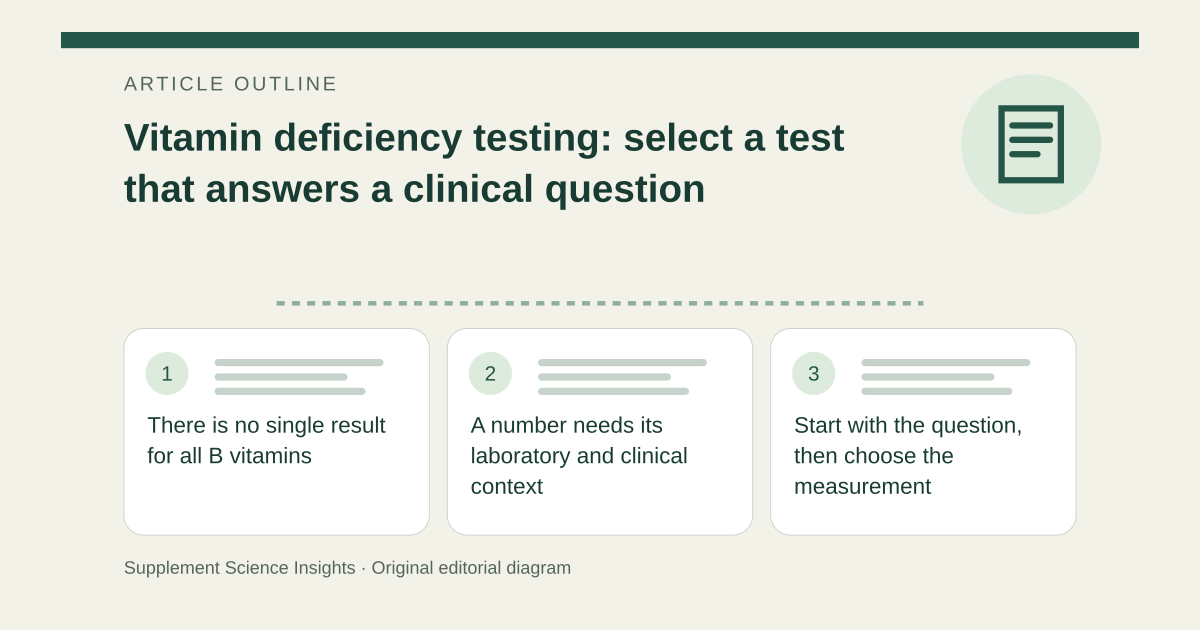
There is no single result for all B vitamins
MedlinePlus describes B-vitamin tests as measuring one or more individual vitamins in blood or urine. For example, B12 and folate testing may help investigate particular forms of anemia. [1]
The test should match the suspected problem. Symptoms can overlap among deficiencies and other conditions, so a symptom list alone cannot reliably select a supplement. [1]
A number needs its laboratory and clinical context
MedlinePlus notes that medicines, inflammation and laboratory reference ranges can affect interpretation. A normal vitamin result does not necessarily explain persistent symptoms, and a low result may prompt investigation of its cause. [1]
Arrange testing through a clinician or an appropriate laboratory pathway that includes interpretation. Access to a test is different from knowing whether it is needed or what action its result supports. [1]
Start with the question, then choose the measurement
Imagine fatigue prompts a large panel. A clinician may instead identify a specific anemia or absorption question and choose tests that directly address it.
| Detail | Interpretation |
|---|---|
| Clinical question | Guides selection |
| Laboratory result | Needs context |
| Persistent symptoms | May need other evaluation |
Sources for this article
- Vitamin B Test: MedlinePlus Medical Test
Source consulted: 2026-09-17. This is a reference resource, not a claim that we conducted the studies or tested a product.