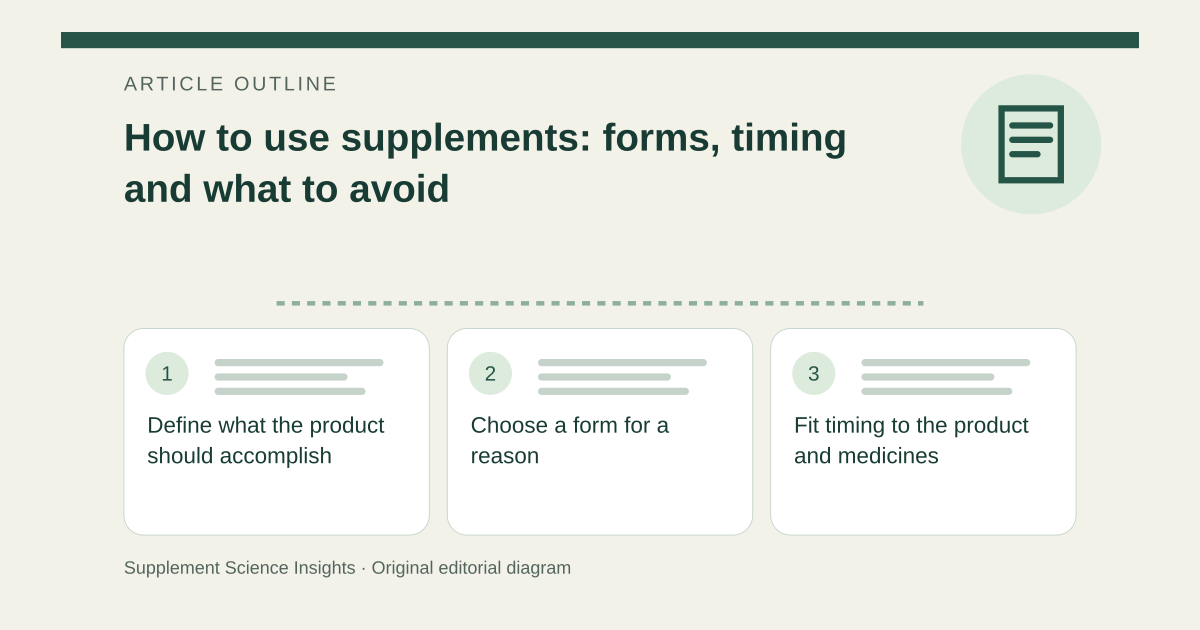
Define what the product should accomplish
Examples include a documented deficiency or a specific life-stage recommendation. ODS explains that some supplements have useful roles but cannot replace a varied diet. Record the intended outcome and how it will be reviewed; vague wellness language does not supply evidence for every ingredient. [1]
Choose a form for a reason
Compare the declared nutrient amount, serving size and preparation. Calcium citrate and carbonate differ in meal dependence, illustrating why forms sometimes matter. That does not mean every product labeled advanced, natural or highly absorbable has superior clinical results. [2][3]
Fit timing to the product and medicines
Vitamin D can be taken with a meal containing some fat, while prescribed ferrous sulfate has different food instructions. Have a pharmacist check a multi-product schedule when medicines are involved. Do not use a timing gap as a substitute for resolving an unsafe combination. [4][5][1]
Avoid duplication and reassess
Imagine a multivitamin, hair blend and separate nutrient capsule overlap. Add the amounts across all products before buying another bottle. Keep names, doses and frequency in a shared record, report adverse effects and avoid replacing prescribed care with supplement claims. [1]
| Decision | Useful check |
|---|---|
| Need | Specific purpose |
| Form | Evidence and suitability |
| Timing | Directions and medicines |
| Stack | Check duplicate amounts |
Sources for this article
- Dietary Supplements: What You Need to Know - Consumer
Source consulted: 2026-09-21. This is a reference resource, not a claim that we conducted the studies or tested a product. - Calcium - Health Professional Fact Sheet
Source consulted: 2026-09-21. This is a reference resource, not a claim that we conducted the studies or tested a product. - NIH ODS: Frequently Asked Questions
Source consulted: 2026-09-21. This is a reference resource, not a claim that we conducted the studies or tested a product. - Vitamin D - Consumer
Source consulted: 2026-09-21. This is a reference resource, not a claim that we conducted the studies or tested a product. - How and when to take ferrous sulfate - NHS
Source consulted: 2026-09-21. This is a reference resource, not a claim that we conducted the studies or tested a product.