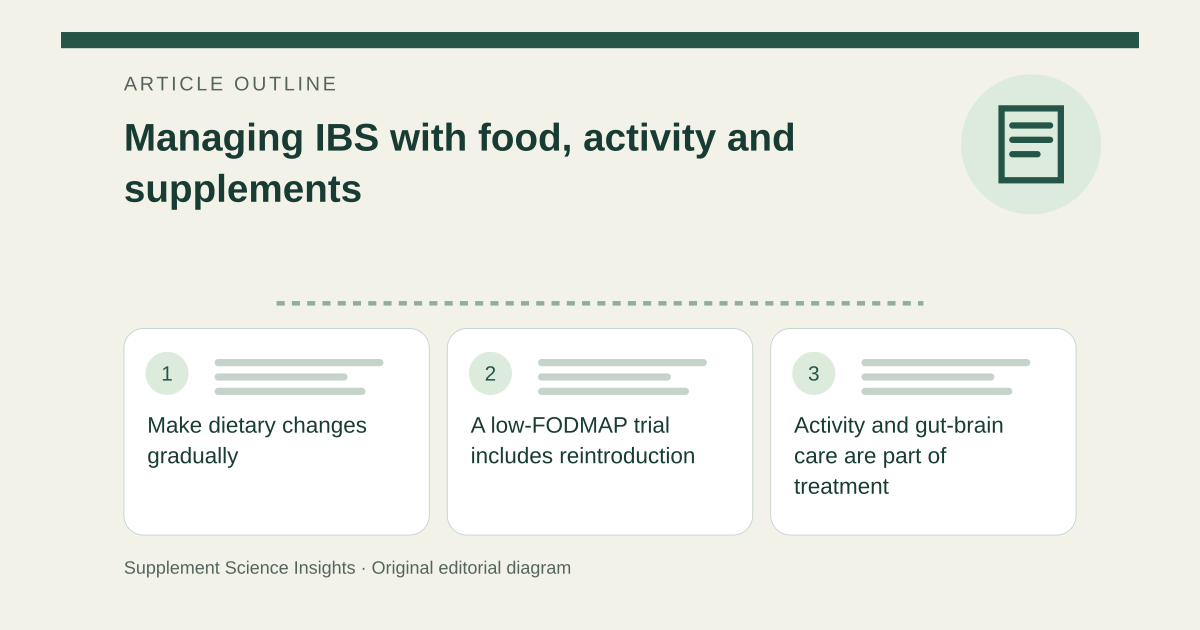
Make dietary changes gradually
NIDDK describes soluble fiber as more helpful for IBS symptoms than insoluble fiber. Increase fiber gradually because a sudden rise can cause gas and bloating. The amount and food choices should fit whether constipation, diarrhea or mixed symptoms predominate. A dietitian can help preserve nutrition while testing changes. [1]
A low-FODMAP trial includes reintroduction
A clinician may suggest limiting certain fermentable carbohydrates for a few weeks, then gradually adding foods back if symptoms improve. The goal is to identify tolerable foods, not permanently eliminate every item on a long restriction list. A food’s reputation as healthy does not guarantee symptom tolerance for everyone. [1]
Activity and gut-brain care are part of treatment
NIDDK includes physical activity, adequate sleep, stress management and therapies such as CBT or gut-directed hypnotherapy among approaches to IBS. Medicines are selected for the dominant symptoms. These options can be combined in an individualized plan rather than framing symptoms as a problem a supplement alone must solve. [2]
Use supplements with a defined target
Probiotic effects vary by preparation and outcome, and research does not identify a universal IBS winner. Coated peppermint-oil capsules are among options discussed for abdominal pain, but formulation and tolerance matter. Ask what symptom is being targeted and when to review benefit or side effects. [3][2]
Change one part of the plan at a time
Imagine adding a fiber powder, probiotic and restrictive diet on the same day. If bloating changes, the cause is difficult to identify. Work with the clinician or dietitian to sequence changes and record pain, stool pattern and tolerance; dietary restriction should have a review and reintroduction plan. [1][2]
| Situation | Next consideration |
|---|---|
| Constipation-focused symptoms | Gradual soluble fiber may be relevant |
| Low-FODMAP trial | Plan reassessment and reintroduction |
| Probiotic purchase | Specify the preparation and target symptom |
Sources for this article
- Eating, Diet, & Nutrition for Irritable Bowel Syndrome - NIDDK
Source consulted: 2026-09-20. This is a reference resource, not a claim that we conducted the studies or tested a product. - Treatment for Irritable Bowel Syndrome - NIDDK
Source consulted: 2026-09-20. This is a reference resource, not a claim that we conducted the studies or tested a product. - Probiotics - Health Professional Fact Sheet
Source consulted: 2026-09-20. This is a reference resource, not a claim that we conducted the studies or tested a product.