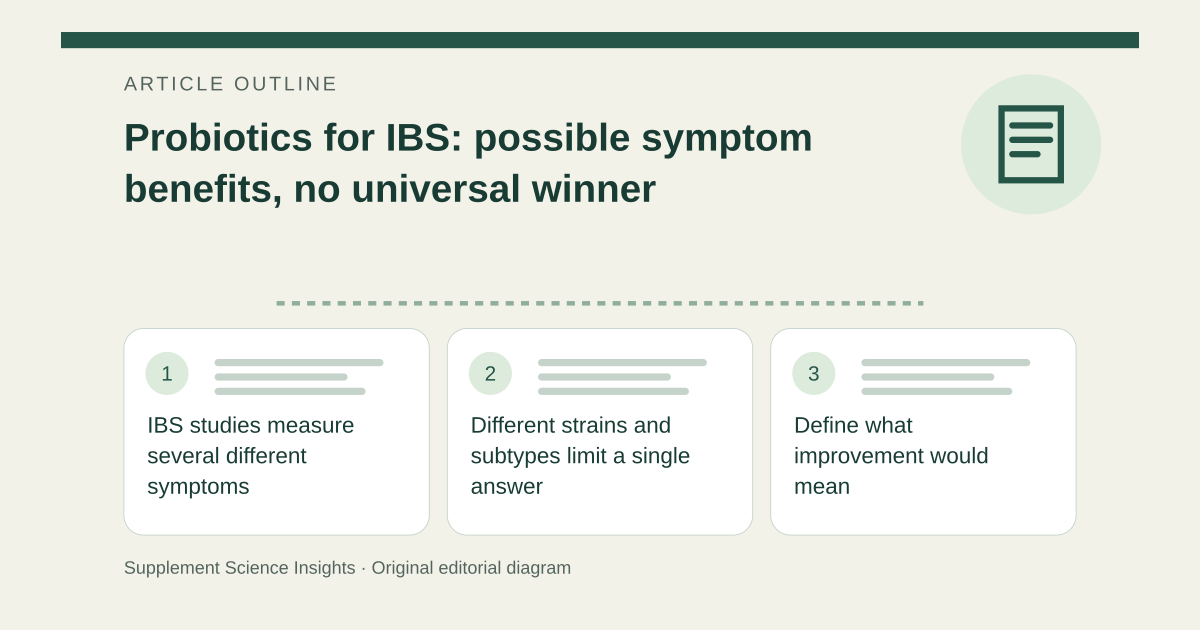
IBS studies measure several different symptoms
IBS can involve abdominal discomfort, bloating and changes in stool form or frequency. ODS summarizes trials with some improvements in overall symptoms or abdominal pain, alongside inconsistent findings. [1]
A reduced bloating score does not automatically mean less pain, normalized stool frequency or improved quality of life. Keep the endpoint visible when interpreting a claim that a product works for IBS. [1]
Different strains and subtypes limit a single answer
The studies use different single-strain and multi-strain preparations, doses and durations. ODS concludes that more high-quality research is needed to establish the relevant strain, dose, duration and IBS subtype. [1]
A larger CFU count or a longer organism list therefore does not identify a clinical winner. Evidence for a particular mixture is not evidence for every product sharing one ingredient. [1]
Define what improvement would mean
Imagine a person mainly seeks relief from abdominal pain, while a cited trial’s clearest result concerns gas. The finding may be of interest, but it does not directly answer the person’s primary goal.
A comparison note should preserve the main symptom, trial population and measured outcome rather than labeling the result as an IBS cure.
| Question | Interpretation |
|---|---|
| Less gas | One symptom endpoint |
| Less abdominal pain | A separate endpoint |
| IBS reversed | Not established by either alone |
Do not use supplementation to bypass diagnosis
These studies concern assessed patient groups. New or unexplained digestive symptoms should not be assumed to be IBS merely because a probiotic is marketed for bloating. [1]
This article summarizes ODS rather than independently comparing all trials or endorsing a brand. Existing treatment and relevant medical conditions remain part of the decision. [1]
Sources for this article
- NIH ODS: Probiotics
Source consulted: 2026-09-17. This is a reference resource, not a claim that we conducted the studies or tested a product.