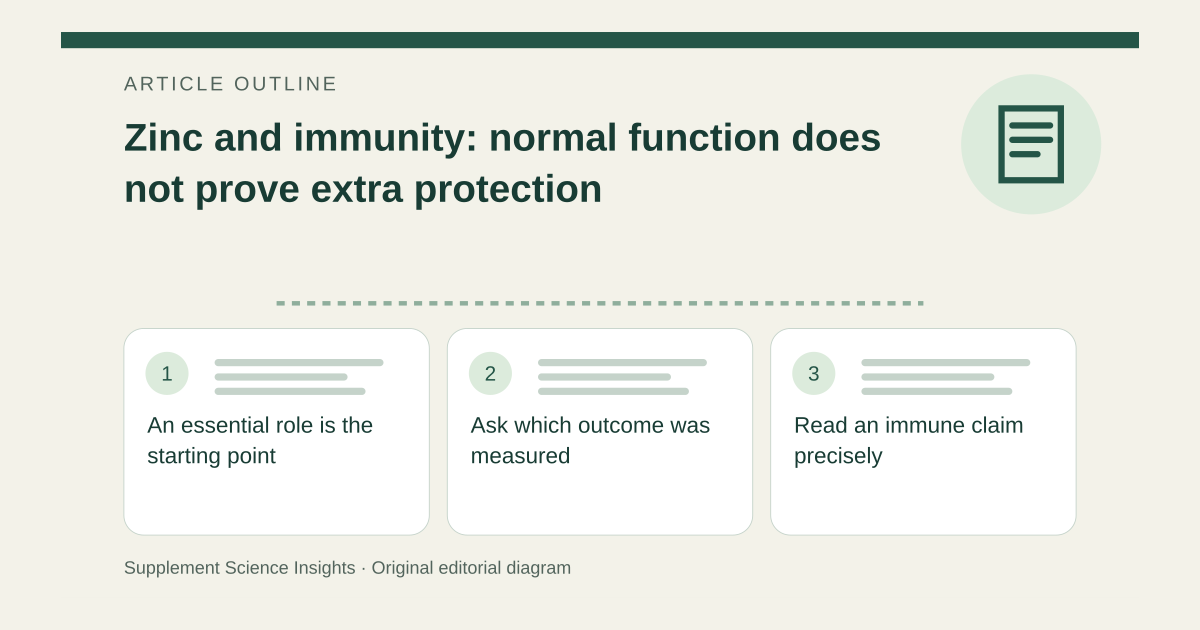
An essential role is the starting point
Zinc is involved in immune function, cell signaling and protein and DNA synthesis. Deficiency can affect several tissues and increase vulnerability to illness in relevant populations. These biological roles explain why adequate intake matters. [1]
They do not establish that taking additional zinc beyond an adequate intake will prevent infections. “Supports immunity” can describe normal physiology without demonstrating a clinically meaningful benefit from an extra product. [1]
Ask which outcome was measured
A study of people at risk of deficiency does not automatically describe well-nourished adults. Likewise, an effect on a blood marker is not the same as fewer infections, a shorter illness or reduced complications. Each is a separate outcome. [1]
ODS describes low-certainty evidence that zinc may shorten an established common cold, while it appears to make little or no difference in preventing colds. A possible treatment effect therefore should not be converted into a claim of broad preventive protection. [1]
Read an immune claim precisely
Imagine a product advertises zinc’s essential role in immunity next to a promise of avoiding seasonal illness. The first statement concerns nutrient function. The second needs evidence that the actual intervention changes infection outcomes in a relevant population.
A scientifically relevant question is who received what preparation, compared with what, and which outcome improved. Ingredient familiarity does not fill those gaps.
| Question | What it establishes |
|---|---|
| Zinc is necessary for immunity | A statement about normal nutrient function |
| A person is zinc deficient | An assessment requiring evidence |
| Extra zinc prevents infection | A distinct intervention claim needing clinical evidence |
More zinc can move in the wrong direction
ODS reports that sustained high zinc intake can reduce immune function as well as interfere with copper absorption. That makes “more is better” an especially poor rule for interpreting immune-support claims. [1]
Review intake and risk factors if inadequacy is a concern. This overview does not recommend routine high-dose zinc, establish a product ranking or extend cold evidence to other infections. It distinguishes the mineral’s normal role from outcomes a supplement must demonstrate. [1]
Sources for this article
- NIH ODS — Zinc: Health Professional Fact Sheet
Source consulted: 2026-09-17. This is a reference resource, not a claim that we conducted the studies or tested a product.