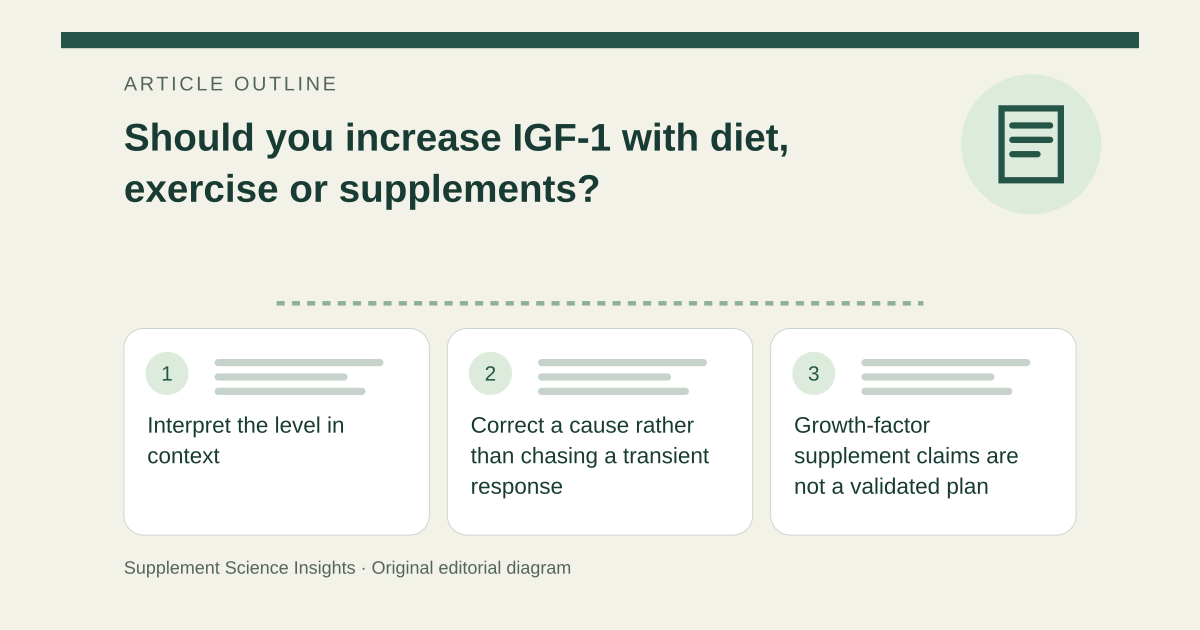
Interpret the level in context
MedlinePlus explains that IGF-1 mediates many growth-hormone effects and changes across life. A low result may reflect normal age-related change or a medical condition; high values can also indicate a disorder. Appropriate reference ranges and further assessment matter more than comparing yourself with a youthful maximum. [1]
Correct a cause rather than chasing a transient response
Nutrition and activity can affect the growth-hormone system, but an acute exercise-related hormone change is not proof of lasting muscle gain or better health. Malnutrition and endocrine disease require their own treatment. The Increlex label explicitly separates primary deficiency from secondary causes such as malnutrition or hypothyroidism. [1][2]
Growth-factor supplement claims are not a validated plan
OPSS finds no established performance benefit for deer-antler velvet and uncertainty about what growth factors remain in finished products. A natural-source claim does not supply a predictable IGF-1 dose. Athletes also need to consider prohibited-substance rules. [3][4]
Use clinical goals for follow-up
Imagine a healthy adult wants to raise a low-normal result for anti-aging. Discuss whether the test indicates any disorder before adding products. A child with poor growth or an adult with signs of hormone disease needs specialist assessment, not an online boosting protocol. [1][5]
| Question | Interpretation |
|---|---|
| Low-normal result | Not automatically deficiency |
| Exercise hormone change | Not proof of lasting benefit |
| Antler product | Uncertain content and benefit |
| Growth concern | Clinical assessment |
Sources for this article
- IGF-1 (Insulin-like Growth Factor 1) Test: MedlinePlus Medical Test
Source consulted: 2026-09-21. This is a reference resource, not a claim that we conducted the studies or tested a product. - These highlights do not include all the information needed to use INCRELEX ®safely and effectively. See full prescribing information for INCRELEX ®. INCRELEX ®(mecasermin) injection, for subcutaneous use Initial U.S. Approval: 2005
Source consulted: 2026-09-21. This is a reference resource, not a claim that we conducted the studies or tested a product. - Deer Antler Velvet in Dietary Supplements
Source consulted: 2026-09-21. This is a reference resource, not a claim that we conducted the studies or tested a product. - Growth Hormone in Sport: What Athletes Should Know | USADA
Source consulted: 2026-09-21. This is a reference resource, not a claim that we conducted the studies or tested a product. - Dietary Supplements: What You Need to Know - Consumer
Source consulted: 2026-09-21. This is a reference resource, not a claim that we conducted the studies or tested a product.