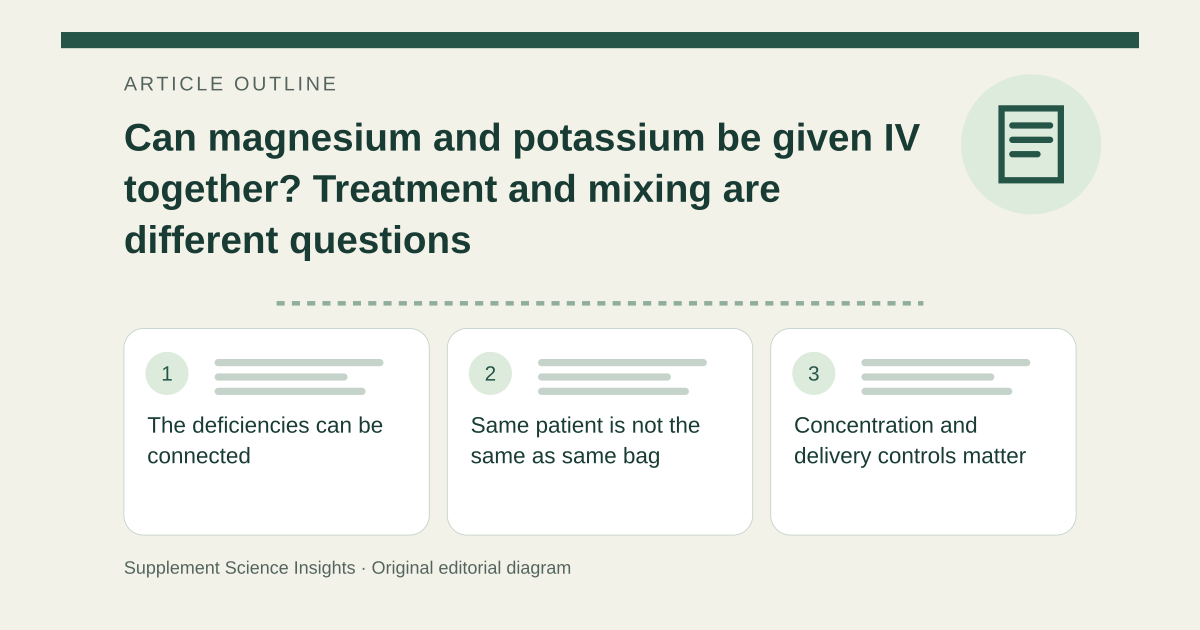
The deficiencies can be connected
NHS SPS lists magnesium depletion among causes or contributors to low potassium. Its replacement guidance includes monitoring the other electrolyte. Addressing both abnormalities can therefore be part of a coordinated treatment plan rather than two unrelated decisions. [1][2]
Same patient is not the same as same bag
Concurrent treatment describes what the patient needs; admixture compatibility describes what can safely share a container or line. The inspected sources do not establish universal compatibility for every magnesium and potassium product. Pharmacy must verify the actual formulations and administration arrangement. [3][1]
Concentration and delivery controls matter
SPS highlights the risk of accidental overdose from high-strength IV potassium and the need to follow organizational medicines policy. Injectable magnesium also requires controlled preparation and administration. This is not a home electrolyte-drink recipe or a reason to improvise infusion rates. [1][2]
Monitoring covers more than one blood result
SPS recommends monitoring magnesium, potassium and kidney function in the relevant replacement plans, with blood pressure or ECG monitoring according to the treatment and severity. Changing renal function can alter the risk of accumulation. The team adjusts treatment to the clinical response and repeat results. [1][2]
Ask the team the precise compatibility question
Imagine both electrolytes are prescribed but the nurse uses separate preparations. That can be appropriate even though both deficiencies are being treated. The relevant question is whether the specific products and setup have verified compatibility, not whether the two nutrients can ever be given in one period of care. [3][1]
| Question | Required distinction |
|---|---|
| Does the patient need both? | Clinical indication |
| Can they share a bag or line? | Product-specific compatibility |
| What rate and concentration? | Controlled prescription and local policy |
| What monitoring? | Electrolytes, kidney function and clinical status |
Sources for this article
- Treating acute hypokalaemia in adults – NHS SPS - Specialist Pharmacy Service – The first stop for professional medicines advice
Source consulted: 2026-09-21. This is a reference resource, not a claim that we conducted the studies or tested a product. - Treating acute hypomagnesaemia in adults – NHS SPS - Specialist Pharmacy Service – The first stop for professional medicines advice
Source consulted: 2026-09-21. This is a reference resource, not a claim that we conducted the studies or tested a product. - DailyMed - MAGNESIUM SULFATE- magnesium sulfate heptahydrate injection, solution
Source consulted: 2026-09-21. This is a reference resource, not a claim that we conducted the studies or tested a product.