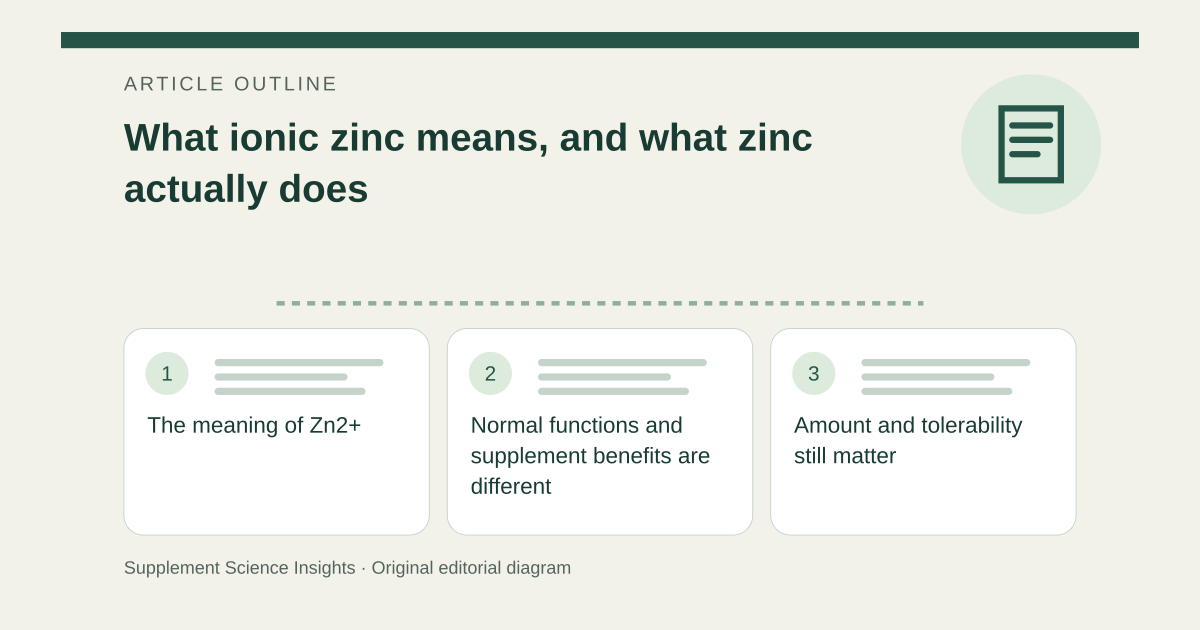
The meaning of Zn2+
An ion has an electrical charge. In the biological form commonly written Zn2+, zinc carries a positive two charge. ChEBI classifies this zinc ion as a divalent metal cation and a cofactor. “Ionic zinc” is therefore a description of chemistry, not a newly discovered nutrient. [1][2]
A liquid product may use the term to describe zinc present in solution. To assess the product, identify its actual zinc compound, the amount of elemental zinc and the serving size. The word ionic alone does not specify all the other substances in the bottle or establish superiority over another formulation. [1][2]
Normal functions and supplement benefits are different
Zinc supports the activity of many enzymes and contributes to protein and DNA synthesis, immune function and wound healing. Adequate zinc is also important for growth and development. These are reasons that zinc is essential; they are not evidence that everyone gains additional benefit from extra zinc. [2]
The relevant clinical question depends on whether a person has inadequate intake or a particular condition, and on the tested formulation. A statement about normal enzyme function does not show that an ionic product improves symptoms more than an equal amount supplied another way. [2]
Amount and tolerability still matter
For supplement comparisons, NIH explains that the Supplement Facts amount reports elemental zinc rather than the weight of the whole zinc compound. This prevents a common error: comparing a salt's total mass with another product's nutrient amount. [2]
Too much zinc can cause nausea and other gastrointestinal symptoms. Sustained high intakes can interfere with copper absorption. Calling a product ionic does not remove those risks. The adult upper intake level is 40 mg per day from all sources for generally healthy people; it is not a target dose, and medical treatment is a separate setting. [2]
Comparing two hypothetical bottles
Suppose a tablet and a liquid each declare 10 mg of zinc per labeled serving. Their elemental-zinc amounts match in this example, even if the liquid says ionic. That does not prove equal absorption, but it rules out assuming that the marketing term means more zinc. Compare the formulation and relevant evidence separately. [2][1]
| Label detail | Interpretation |
|---|---|
| 10 mg zinc per serving | Declared elemental-zinc amount |
| Ionic | A chemistry description, not a clinical ranking |
| Zinc compound weight | Not automatically the same as elemental zinc |
Sources for this article
- zinc(2+) (CHEBI:29105)
Source consulted: 2026-09-20. This is a reference resource, not a claim that we conducted the studies or tested a product. - Zinc - Health Professional Fact Sheet
Source consulted: 2026-09-20. This is a reference resource, not a claim that we conducted the studies or tested a product.