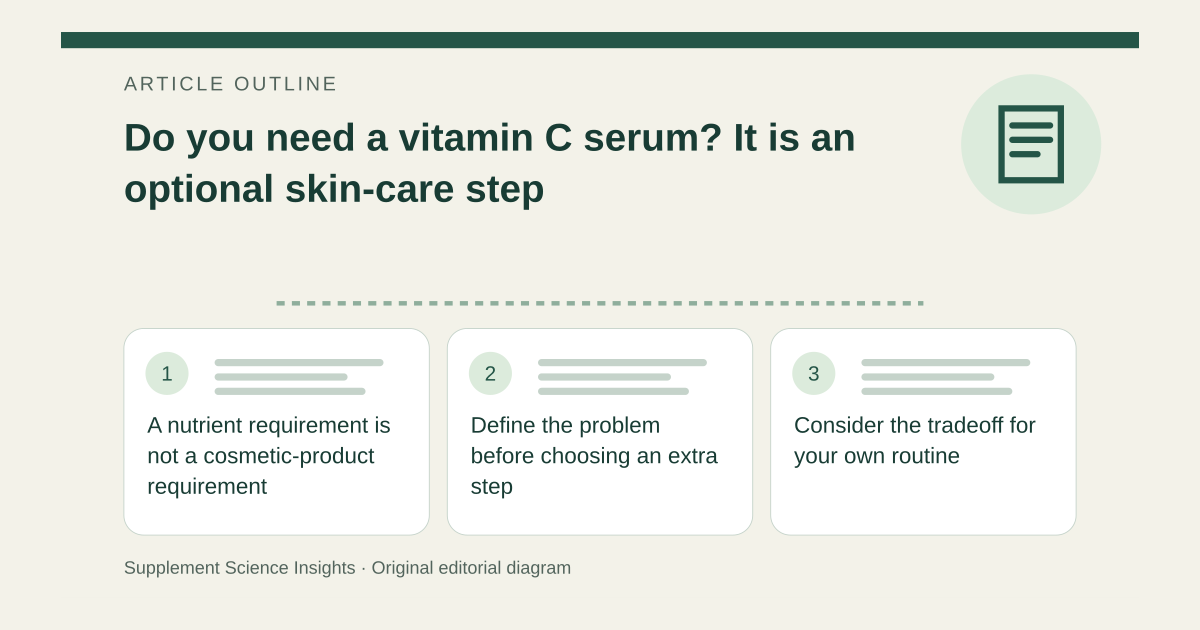
A nutrient requirement is not a cosmetic-product requirement
The body needs vitamin C, and research examines topical vitamin C for particular skin outcomes. Those facts do not establish that everyone needs a serum. AAD presents vitamin C as an option within skin care rather than a replacement for basic cleansing, moisturizing and sun protection. [1][2]
Define the problem before choosing an extra step
Uneven pigmentation, acne, dryness and sensitivity are different concerns. A serum may be considered for a specific goal, but adding it without a goal can make it harder to identify what helps or irritates. A simple tolerated routine can be more useful than one with multiple overlapping actives. [1][3]
Consider the tradeoff for your own routine
Imagine a serum repeatedly stings while the rest of the routine is comfortable. There is no nutritional obligation to keep applying it to the face. Stop the troublesome product and ask about alternatives if a skin concern remains; dietary adequacy and topical-product tolerance are separate questions. [4][2]
| Question | Practical interpretation |
|---|---|
| Dietary vitamin C need | A nutrition question |
| Topical serum | Optional and goal-specific |
| Repeated irritation | Reason to reconsider it |
Sources for this article
- Dermatologist-recommended skin care for your 20s
Source consulted: 2026-09-20. This is a reference resource, not a claim that we conducted the studies or tested a product. - The Roles of Vitamin C in Skin Health - PMC
Source consulted: 2026-09-20. This is a reference resource, not a claim that we conducted the studies or tested a product. - Do facial masks work, and should I add one to my skin care routine?
Source consulted: 2026-09-20. This is a reference resource, not a claim that we conducted the studies or tested a product. - How to test skin care products
Source consulted: 2026-09-20. This is a reference resource, not a claim that we conducted the studies or tested a product.