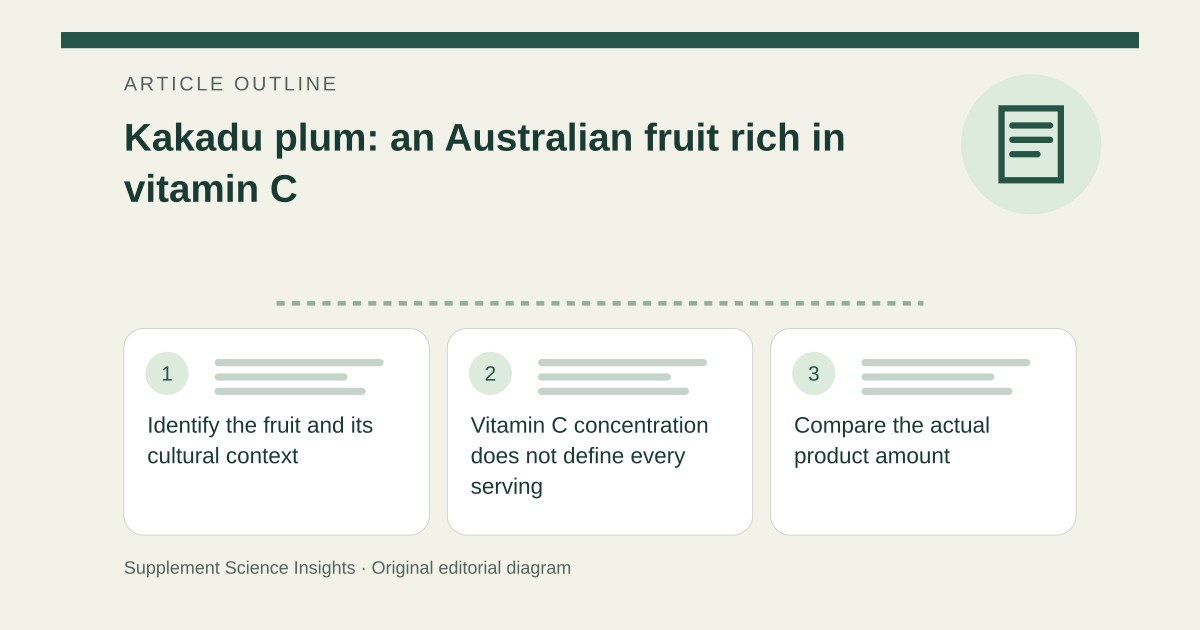
Identify the fruit and its cultural context
Parks Australia describes Kakadu plum as a food source for Bininj/Mungguy, eaten ripe and raw or made into jam. The tree grows in northern tropical woodlands and is also known as billygoat plum. Its botanical identity is more precise than a generic superfruit label. [1]
Vitamin C concentration does not define every serving
The park describes the fruit as unusually rich in vitamin C, but a whole fruit, jam and dried extract have different compositions and serving sizes. Do not transfer a fresh-fruit comparison directly to a capsule. ODS describes vitamin C’s normal role in collagen formation and other functions; extra intake is not automatically an added clinical benefit. [1][2]
Compare the actual product amount
Imagine a powder advertises Kakadu plum without stating vitamin C per serving. The fruit name does not supply the missing number. Use measured product labeling when comparing nutrient amounts, and distinguish culinary use from claims about treating illness or improving skin. [1][2]
| Item | Interpretation |
|---|---|
| Whole fruit | A food with its own portion size |
| Jam or extract | Different processing and concentration |
| Vitamin C claim | Needs a per-serving amount |
Sources for this article
- Kakadu plum | Kakadu National Park | Parks Australia
Source consulted: 2026-09-20. This is a reference resource, not a claim that we conducted the studies or tested a product. - Vitamin C - Health Professional Fact Sheet
Source consulted: 2026-09-20. This is a reference resource, not a claim that we conducted the studies or tested a product.