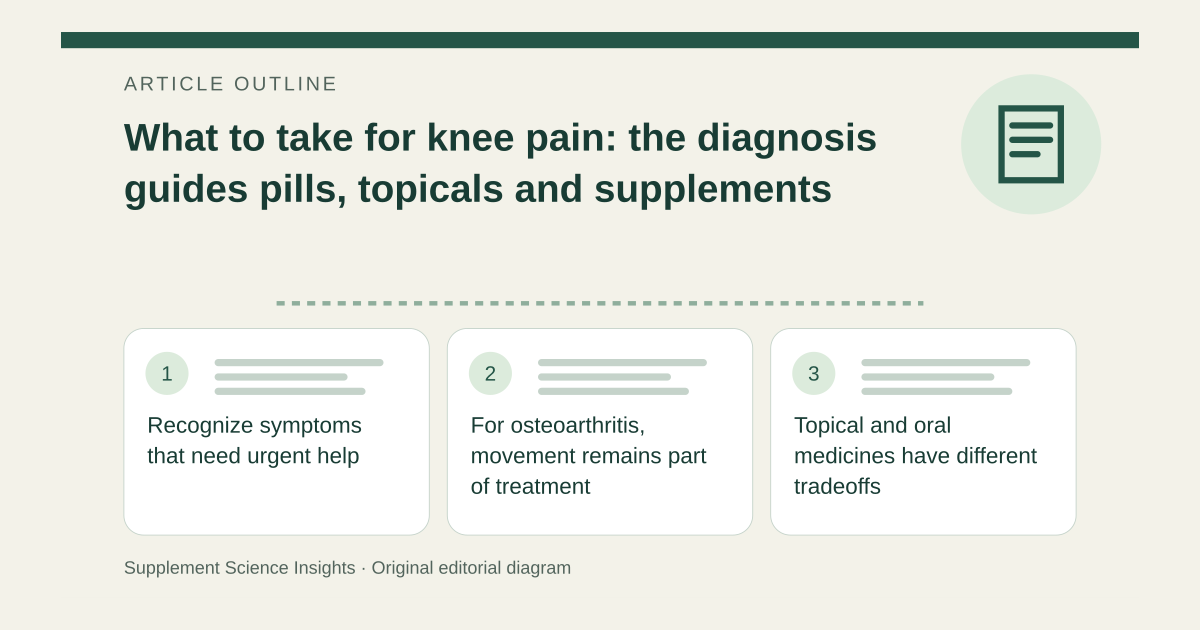
Recognize symptoms that need urgent help
NHS advises urgent assessment for severe pain, inability to bear weight or move the knee, major swelling or deformity, locking or giving way, or fever with a hot red knee. Do not wait for a supplement to work when those signs are present. [1]
For osteoarthritis, movement remains part of treatment
NHS describes appropriately planned strengthening and general fitness exercise as important osteoarthritis treatment. A physiotherapist can tailor the plan, and weight management may help when relevant. Pain relief should support the broader plan rather than replace assessment and rehabilitation. [2]
Topical and oral medicines have different tradeoffs
Topical NSAIDs can help knee osteoarthritis. Oral NSAIDs may be considered when appropriate but have additional risks and may not suit people with some stomach, heart or other conditions. A pharmacist or clinician can review medicines, allergies and relevant history before use. [2]
Supplements should not be ranked above established care by default
The inspected NHS guidance does not recommend routine glucosamine or chondroitin treatment because strong evidence of benefit is lacking. A vitamin deficiency may deserve correction, but that does not make a vitamin a general knee-pain treatment. Ingredient studies should be interpreted within their specific setting. [2][3]
Match the question to the cause
Imagine knee pain follows a twist and the joint now gives way. That calls for injury assessment rather than choosing a joint-health capsule. For diagnosed osteoarthritis, ask which exercise and pain-management options fit your risks and how to judge improvement. [1][2]
| Question | Practical implication |
|---|---|
| Hot red knee with fever | Urgent assessment |
| Diagnosed osteoarthritis | Exercise and suitable symptom treatment |
| Joint supplement claim | Do not assume proven benefit |
Sources for this article
- Knee pain - NHS
Source consulted: 2026-09-20. This is a reference resource, not a claim that we conducted the studies or tested a product. - Osteoarthritis - Treatment and support - NHS
Source consulted: 2026-09-20. This is a reference resource, not a claim that we conducted the studies or tested a product. - Dietary Supplements: What You Need to Know
Source consulted: 2026-09-20. This is a reference resource, not a claim that we conducted the studies or tested a product.