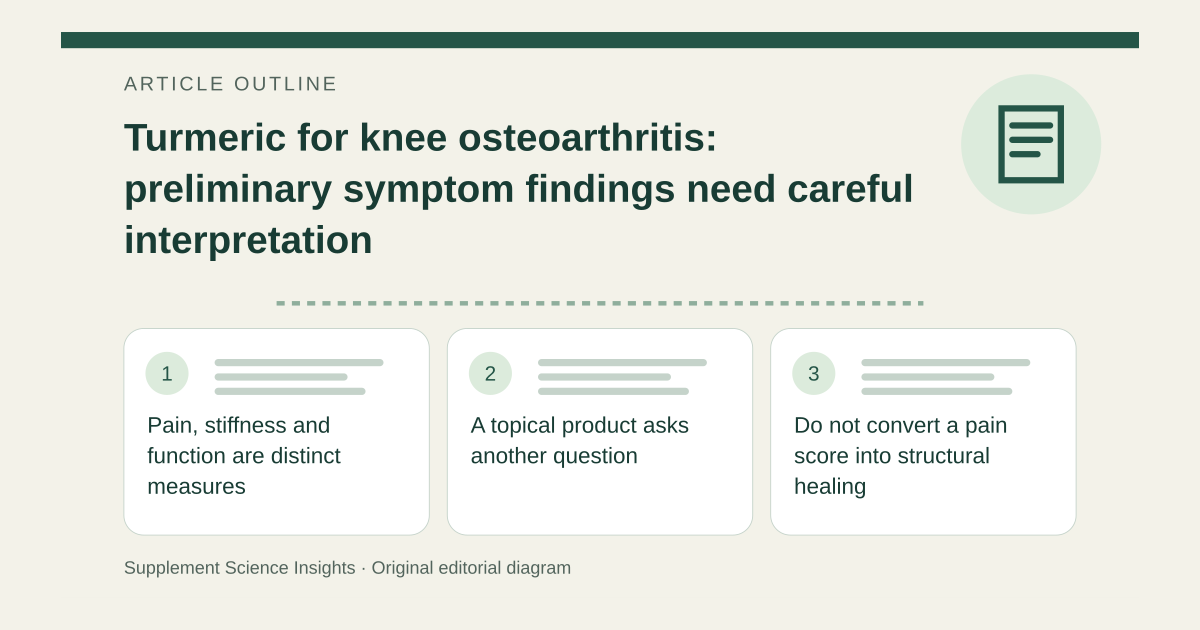
Pain, stiffness and function are distinct measures
NCCIH reports positive preliminary evidence from reviews of oral turmeric or curcumin for knee-osteoarthritis measures, while calling for higher-quality evidence before firm conclusions. The outcome may be pain, stiffness, mobility or another function; these should not be collapsed into a claim of joint repair. [1]
Products vary in actual curcumin content and absorption-enhancing components. A trial’s result cannot be assigned to every turmeric powder or gummy simply because the ingredient name is shared. [1]
A topical product asks another question
The NCCIH summary describes topical curcumin’s effect on knee pain as unclear. Swallowing a studied preparation and applying an ointment are different interventions, with different exposure and tolerability questions. [1]
Oral products can cause gastrointestinal adverse effects, and liver injury has been reported with some enhanced formulations. Possible symptom relief should be considered alongside these concerns and the existing osteoarthritis care plan. No retail formulation or dose is selected here. [1]
Do not convert a pain score into structural healing
Imagine a trial reports a lower pain score after several weeks but does not measure cartilage change. The result may concern symptoms; it does not demonstrate cartilage regrowth or reversal of osteoarthritis. A structural claim would need its own evidence.
| Question | What matters |
|---|---|
| Pain score | Symptom outcome |
| Mobility test | Functional outcome |
| Cartilage repair | Separate unproven inference |
Sources for this article
- NCCIH: Turmeric
Source consulted: 2026-09-17. This is a reference resource, not a claim that we conducted the studies or tested a product.