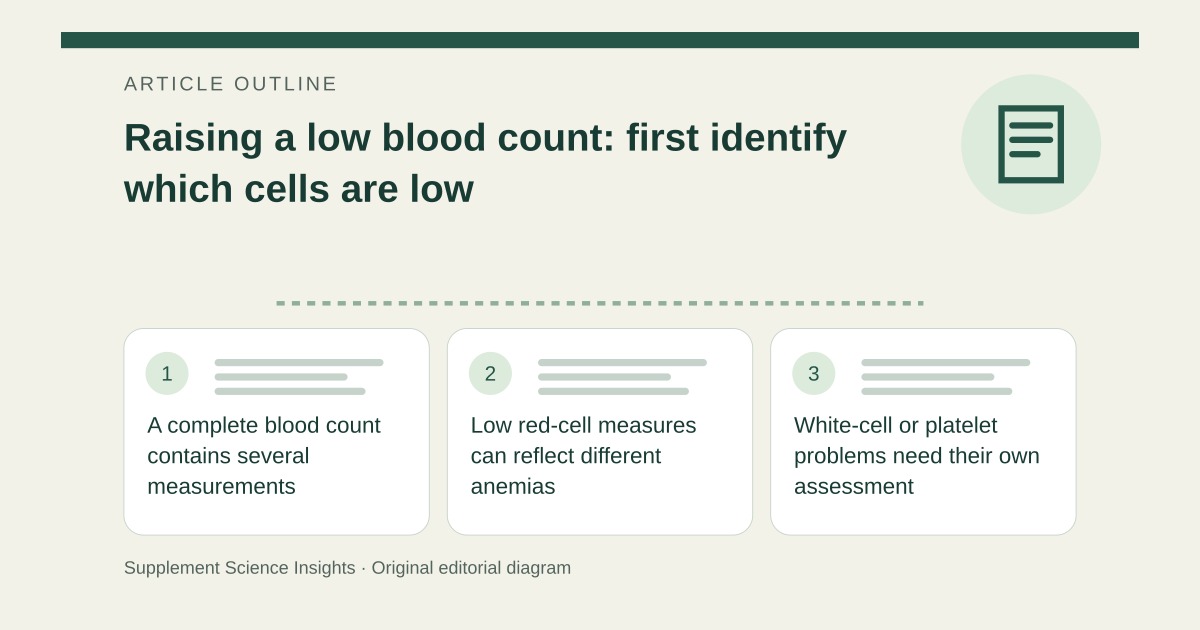
A complete blood count contains several measurements
MedlinePlus describes red cells as carrying oxygen, white cells as participating in defense against infection and platelets as helping clotting. Hemoglobin, hematocrit and average red-cell size provide additional information. Ask which result is abnormal instead of treating the phrase low blood count as a diagnosis. [1]
Low red-cell measures can reflect different anemias
Iron or B12 replacement can help the corresponding deficiency, but anemia can also require treatment of an underlying illness or medicine-related cause. NHLBI cautions against giving iron when iron deficiency is not present because excess can harm organs. [2]
White-cell or platelet problems need their own assessment
A low white-cell result can have causes such as immune or bone-marrow disorders; a complete blood count alone does not establish the diagnosis. Platelets measure another cell line again. The clinician interprets the pattern with history, symptoms and sometimes additional tests. Do not assume that iron will correct an unrelated low result. [1][2]
Prepare a useful follow-up question
Imagine a report flags a low white-cell count while hemoglobin is normal. Bring the exact values, reference ranges and medicine list, and ask whether repeat or additional testing is needed. Buying a blood-building multivitamin before clarifying the result can miss the relevant issue. [1]
| Finding | Question to resolve |
|---|---|
| Hemoglobin or red cells | Assess for anemia and its cause |
| White cells | Review the specific cell pattern and context |
| Platelets | A different result from iron stores |
Sources for this article
- Complete Blood Count (CBC): MedlinePlus Medical Test
Source consulted: 2026-09-20. This is a reference resource, not a claim that we conducted the studies or tested a product. - Anemia - Treatment and Management | NHLBI, NIH
Source consulted: 2026-09-20. This is a reference resource, not a claim that we conducted the studies or tested a product.