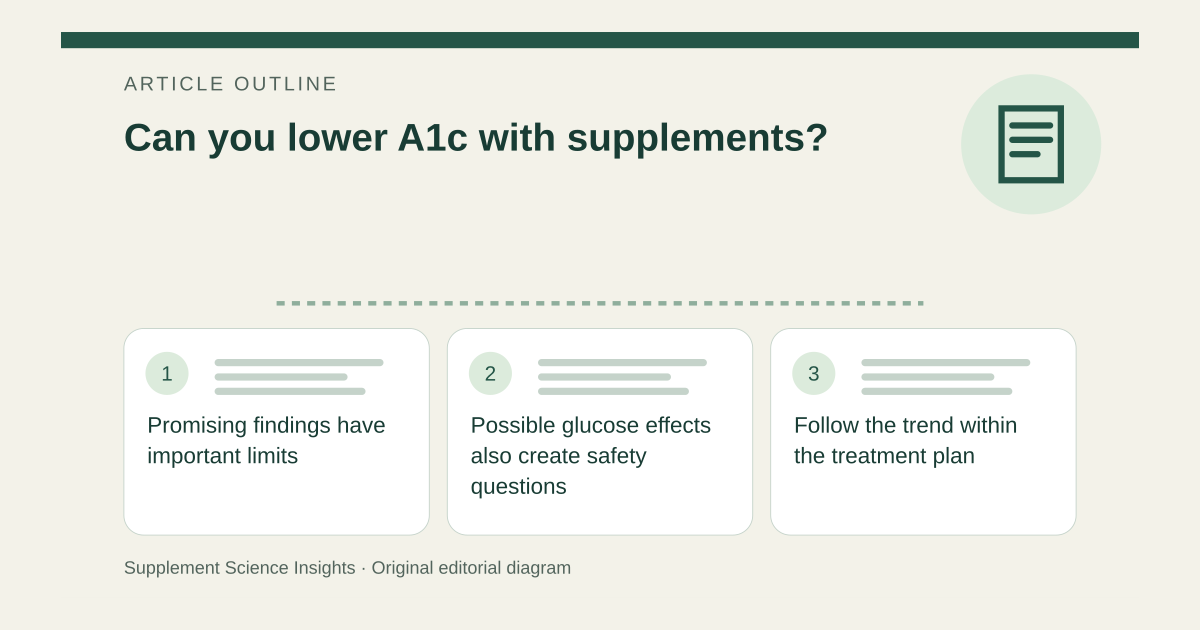
Promising findings have important limits
NCCIH describes weak evidence for possible benefit from products such as chromium, cinnamon and berberine. Studies differ in size, formulation, dose, population and duration, preventing clear conclusions. A result from one small study cannot predict an individual’s A1c change or establish that a retail combination works. [1]
Possible glucose effects also create safety questions
NCCIH warns that supplements can cause adverse effects, including serious kidney problems, and that replacing diabetes medicines with unproven products is harmful. Combining products with an existing glucose-lowering plan needs clinical review. Natural does not mean compatible with every medicine or medical condition. [1]
Follow the trend within the treatment plan
Imagine a supplement advertisement promises a rapid A1c drop. Review the claim with the diabetes team and agree on eating, activity, prescribed treatment and follow-up testing. Do not stop insulin or another prescribed medicine to isolate a supplement’s effect. A deficiency can be assessed separately from a broad diabetes-cure claim. [1]
| Question | Useful check |
|---|---|
| What is the target? | A defined symptom or clinical result |
| What is the exposure? | Full formula and medicines |
| What supports the claim? | Evidence matching the person and outcome |
Sources for this article
- Diabetes and Dietary Supplements: What You Need To Know | NCCIH
Source consulted: 2026-09-21. This is a reference resource, not a claim that we conducted the studies or tested a product.