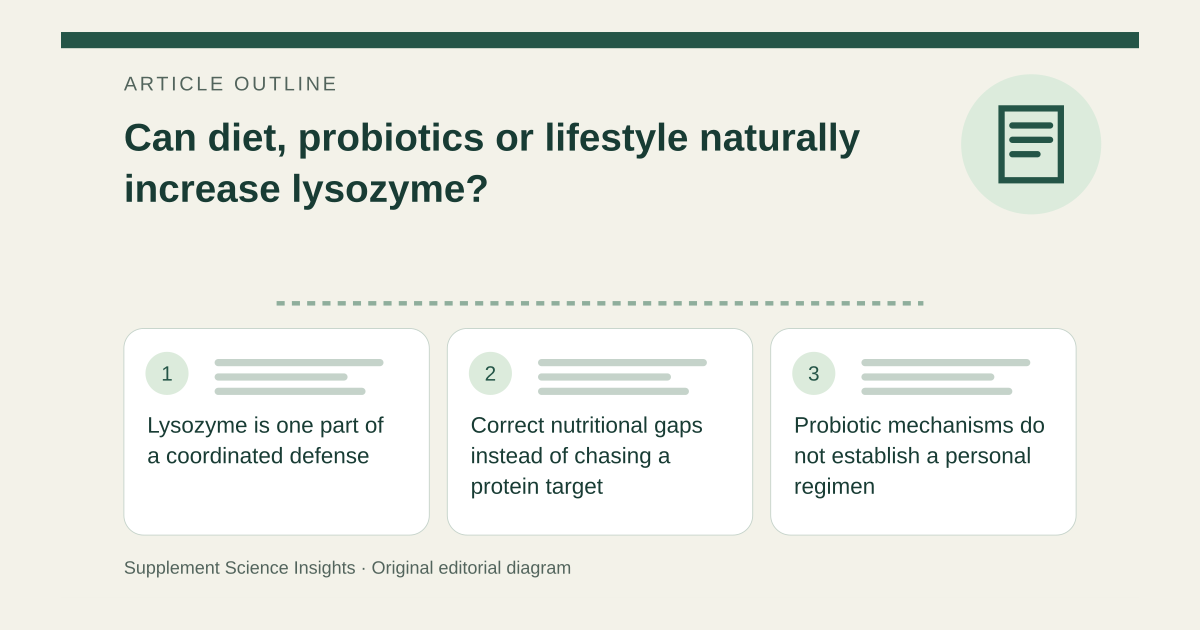
Lysozyme is one part of a coordinated defense
Lysozyme can break bonds in bacterial cell-wall peptidoglycan. Its activity depends on where it is released and the organism encountered. Intestinal secretion is regulated alongside other antimicrobial molecules; it is not a universal score of immune strength. [1]
Correct nutritional gaps instead of chasing a protein target
NIH explains that adequate vitamins and minerals are important for normal immunity, while routine extra micronutrients without deficiency generally do little to prevent or treat specific infections. That supports a varied, nutritionally adequate diet, not a high-dose lysozyme-boosting supplement stack. [2]
Probiotic mechanisms do not establish a personal regimen
Microbes and their metabolites can influence host defenses in experimental systems. Neither those mechanisms nor generic probiotic evidence defines an optimal lysozyme level, strain or dose for an otherwise healthy person. Product claims need human outcomes rather than a marker alone. [1][3]
Use habits for their established purpose
Imagine someone wants fewer illnesses and considers several products advertised to raise lysozyme. Adequate sleep, activity, balanced nutrition and avoiding smoking are sensible general habits, but should not be presented as a proven lysozyme therapy. Recurrent or unusual infections warrant clinical assessment. [4][2]
| Claim | Useful distinction |
|---|---|
| Higher lysozyme | Not a complete immune assessment |
| Adequate nutrients | Corrects nutritional needs |
| Probiotic mechanism | Needs human outcome evidence |
| Repeated infections | Requires cause-specific assessment |
Sources for this article
- Interplay between gut microbiota and antimicrobial peptides - PMC
Source consulted: 2026-09-21. This is a reference resource, not a claim that we conducted the studies or tested a product. - Dietary Supplements for Immune Function and Infectious Diseases - NIH ODS
Source consulted: 2026-09-21. This is a reference resource, not a claim that we conducted the studies or tested a product. - Probiotics - Health Professional Fact Sheet
Source consulted: 2026-09-21. This is a reference resource, not a claim that we conducted the studies or tested a product. - Support Your Immune Health | Respiratory Illnesses | CDC
Source consulted: 2026-09-21. This is a reference resource, not a claim that we conducted the studies or tested a product.