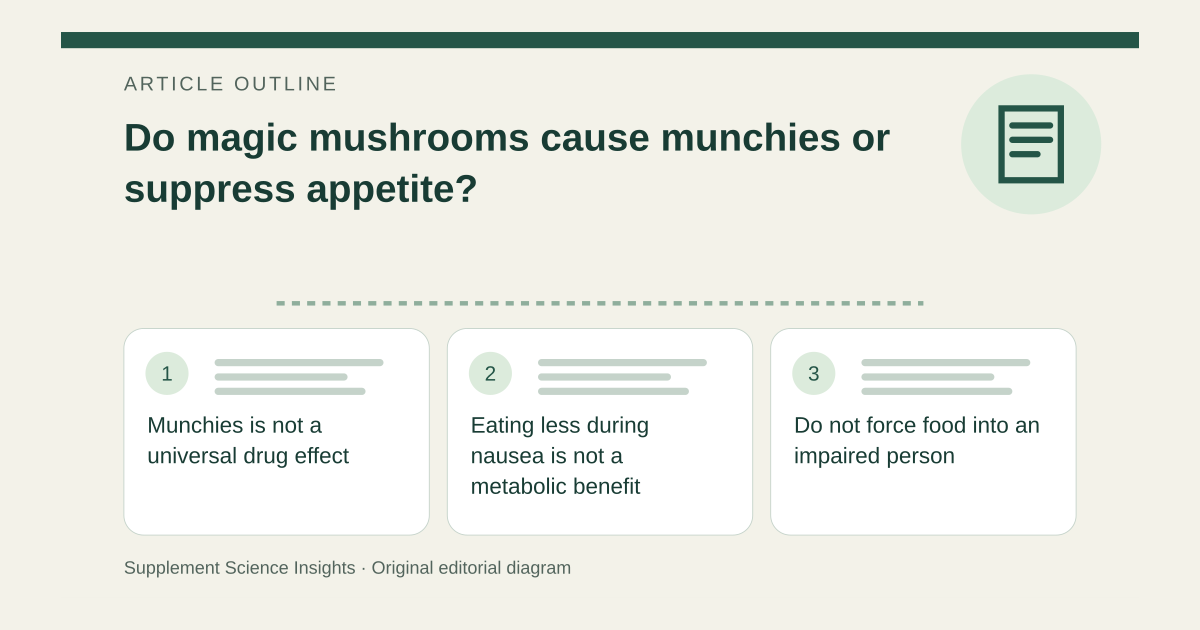
Munchies is not a universal drug effect
Different psychoactive substances act differently. Psilocybin primarily affects serotonin-related signaling, and common adverse effects include nausea and other discomfort. These observations do not establish a reliable appetite stimulant or suppressant. [1][2]
Eating less during nausea is not a metabolic benefit
A temporary reduction in food intake during an unpleasant experience does not show improved weight regulation. Claims about long-term appetite or eating disorders require controlled clinical outcomes rather than a report of one meal. [2]
Do not force food into an impaired person
Someone who is unconscious or cannot safely swallow should not be given food or drink. Persistent vomiting, severe confusion or uncertainty about the product calls for professional advice. [3]
Keep eating-disorder research separate
Imagine a mushroom product is promoted for weight loss because some users do not feel hungry. That claim skips efficacy, nutritional safety and long-term outcomes. Discuss ongoing appetite loss or eating concerns with a clinician instead of self-treating with psychedelics. [2][4]
| Observation | Limit |
|---|---|
| Less hunger during nausea | Not a weight-loss outcome |
| Another drug causes munchies | Not transferable to psilocybin |
| One unusual meal | Not a sustained pattern |
| Unable to swallow safely | No forced food or drink |
Sources for this article
- Psychedelic and Dissociative Drugs | National Institute on Drug Abuse (NIDA)
Source consulted: 2026-09-21. This is a reference resource, not a claim that we conducted the studies or tested a product. - Psilocybin for Mental Health and Addiction: What You Need To Know | NCCIH
Source consulted: 2026-09-21. This is a reference resource, not a claim that we conducted the studies or tested a product. - Poisoning first aid: MedlinePlus Medical Encyclopedia
Source consulted: 2026-09-21. This is a reference resource, not a claim that we conducted the studies or tested a product. - Dietary Supplements: What You Need to Know
Source consulted: 2026-09-21. This is a reference resource, not a claim that we conducted the studies or tested a product.