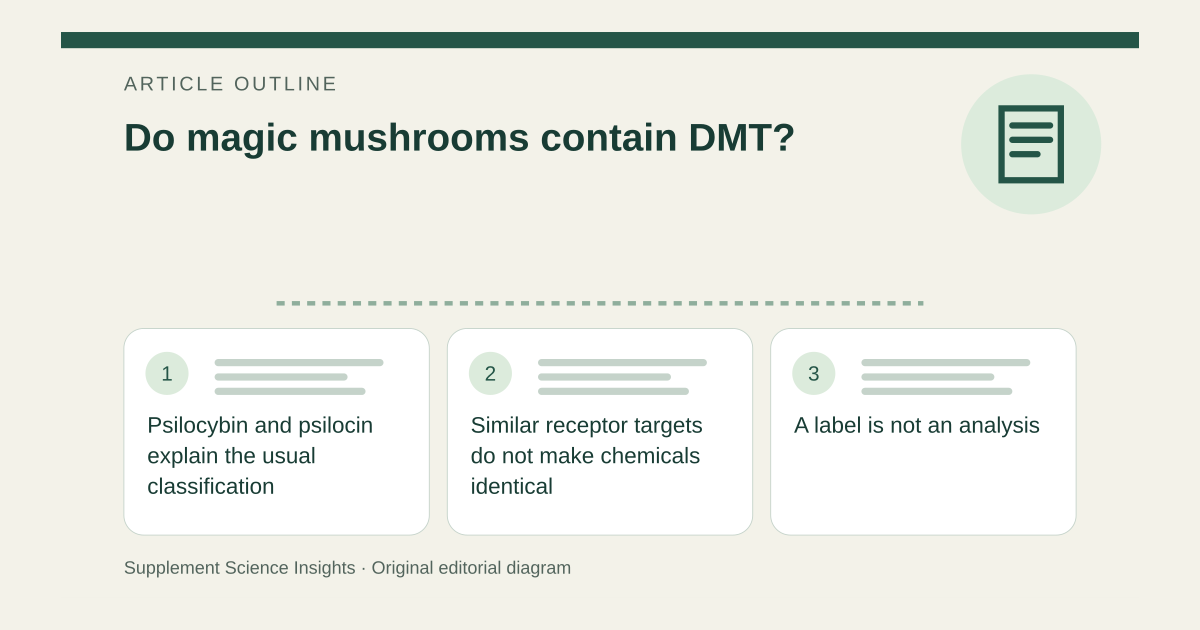
Psilocybin and psilocin explain the usual classification
NCCIH describes conversion of psilocybin to psilocin after ingestion. Those compounds account for the standard explanation of a psilocybin-mushroom experience. Ordinary culinary mushrooms are not therefore psychedelic. [1][2]
Similar receptor targets do not make chemicals identical
NIDA lists DMT and psilocybin as separate classic psychedelics that primarily affect serotonin receptors, particularly 5-HT2A. Shared pharmacology does not establish equal potency, duration or risk. [3]
A label is not an analysis
A chocolate, gummy or powder described as mushroom-based may contain other ingredients or contaminants. The product name cannot establish whether psilocybin, DMT or another substance is present. [3]
Check the claim at the chemical level
Imagine a seller says mushroom powder is natural DMT because both substances affect serotonin. That confuses a receptor mechanism with chemical identity. Neither the claim nor the appearance is a reliable basis for predicting effects. [3]
| Term | Meaning |
|---|---|
| Psilocybin | Precursor converted to psilocin |
| Psilocin | Active psychedelic compound |
| DMT | Different psychedelic |
| Mushroom blend | Name alone does not establish contents |
Sources for this article
- Psilocybin for Mental Health and Addiction: What You Need To Know | NCCIH
Source consulted: 2026-09-21. This is a reference resource, not a claim that we conducted the studies or tested a product. - Psilocybin
Source consulted: 2026-09-21. This is a reference resource, not a claim that we conducted the studies or tested a product. - Psychedelic and Dissociative Drugs | National Institute on Drug Abuse (NIDA)
Source consulted: 2026-09-21. This is a reference resource, not a claim that we conducted the studies or tested a product.