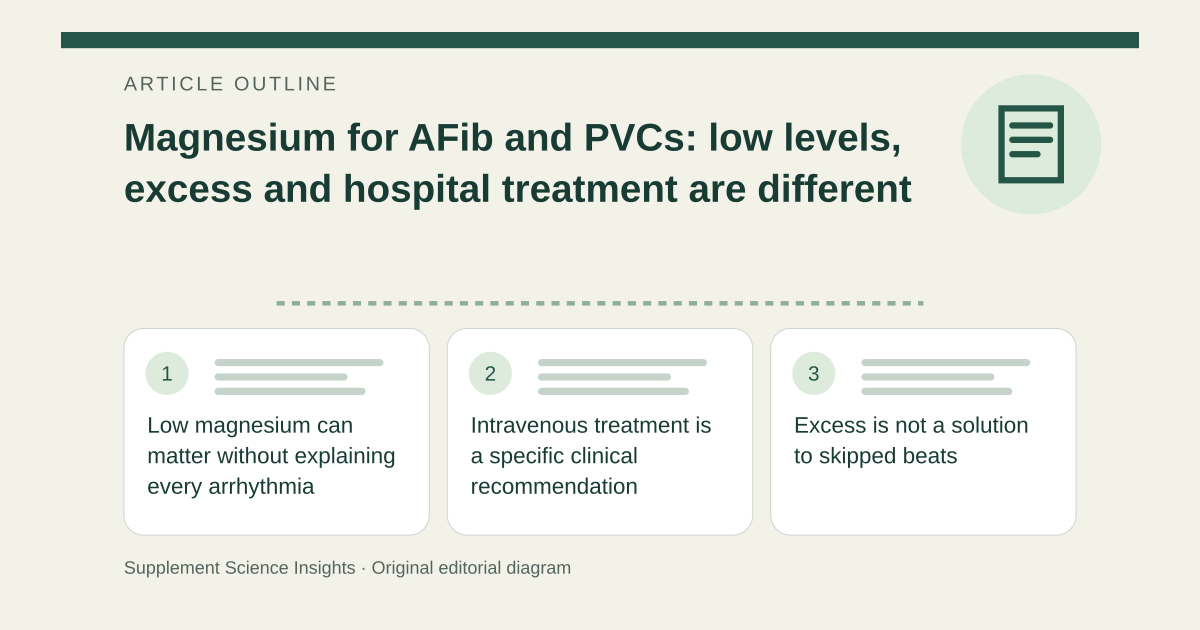
Low magnesium can matter without explaining every arrhythmia
NIH describes abnormal rhythms among severe magnesium-deficiency effects. This makes electrolyte assessment relevant in appropriate circumstances, but it does not establish low magnesium as the cause of every episode of AFib. Thyroid disease, blood pressure, structural heart problems and other factors may require evaluation. [1][2]
Intravenous treatment is a specific clinical recommendation
The AF guideline considers adding intravenous magnesium to standard rate-control measures reasonable in AF with a rapid ventricular response. That recommendation concerns a monitored clinical intervention. It does not identify citrate, glycinate or another oral supplement as the best home treatment. [3]
Excess is not a solution to skipped beats
Serious magnesium excess can cause low blood pressure and irregular heartbeat, especially when impaired kidneys cannot clear the exposure. A sensation of skipped beats does not establish PVCs or prove magnesium toxicity. ECG assessment and the medicine, supplement and kidney history are more useful than increasing or swapping a dose. [1][4]
AF treatment includes a separate stroke decision
Treatment may involve rate or rhythm medicines, cardioversion or ablation, and anticoagulation when indicated to reduce stroke risk. A mineral supplement does not replace these decisions, even if a deficiency is also treated. [2]
Respond to the symptoms, not a form ranking
Recurring or prolonged palpitations warrant assessment. Persistent palpitations with chest pain, breathlessness or faintness need emergency help. Imagine someone with known AF tries glycinate after reading about intravenous magnesium: the route, setting and treatment purpose are not interchangeable. [4][3]
| Observation | Appropriate distinction |
|---|---|
| Low magnesium | Possible contributor, not a complete diagnosis |
| Hospital intravenous magnesium | Adjunct treatment under monitoring |
| Skipped beats after a large dose | Requires assessment, not more magnesium |
| AF stroke risk | Separate anticoagulation decision |
Sources for this article
- Magnesium - Health Professional Fact Sheet
Source consulted: 2026-09-21. This is a reference resource, not a claim that we conducted the studies or tested a product. - Atrial fibrillation - NHS
Source consulted: 2026-09-21. This is a reference resource, not a claim that we conducted the studies or tested a product. - 2023 ACC/AHA/ACCP/HRS Guideline for the Diagnosis and Management of Atrial Fibrillation: A Report of the American College of Cardiology/American Heart Association Joint Committee on Clinical Practice Guidelines - PMC
Source consulted: 2026-09-21. This is a reference resource, not a claim that we conducted the studies or tested a product. - Heart palpitations - NHS
Source consulted: 2026-09-21. This is a reference resource, not a claim that we conducted the studies or tested a product.