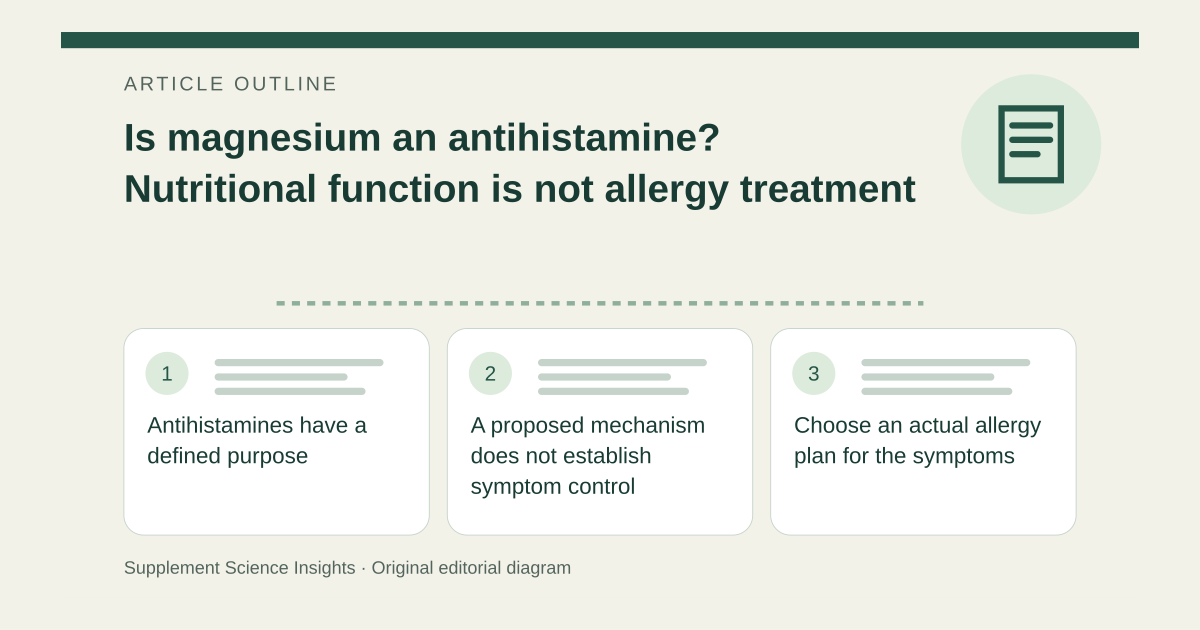
Antihistamines have a defined purpose
NHS describes antihistamines as medicines that block histamine effects and are used for symptoms such as hay fever and hives. They include different products with different dosing and precautions. An essential mineral with roles in normal physiology is not automatically a medicine in this class. [1][2]
A proposed mechanism does not establish symptom control
Magnesium is involved in many biological processes, but the inspected nutrient guidance does not establish an oral allergy-treatment dose. A general anti-inflammatory claim cannot show that a product prevents sneezing, treats hives or replaces prescribed allergy care. [2][1]
Choose an actual allergy plan for the symptoms
A pharmacist or clinician can help select an appropriate antihistamine or another treatment, considering age, pregnancy, health conditions and other medicines. Do not copy the dose of a sedating product or assume that every allergy medicine has the same precautions. [1]
A magnesium product can itself be part of a reaction history
A reaction after a supplement may involve the mineral preparation, another ingredient or another exposure. It does not establish that magnesium will treat the reaction. Trouble breathing, throat swelling or faintness requires emergency help; do not take another serving to test or treat it. [3]
Do not use a calming effect as an allergy test
Imagine someone feels relaxed after magnesium and assumes that histamine has been blocked. That feeling does not measure allergy control. Track the actual symptoms and follow the treatment plan rather than increasing the mineral dose. [1][2]
| Observation | Necessary distinction |
|---|---|
| Mineral supports normal function | Not an antihistamine indication |
| Calmer feeling | Not proof of allergy control |
| Hives after a blend | Needs exposure assessment |
| Breathing or throat symptoms | Emergency response |
Sources for this article
- Antihistamines - NHS
Source consulted: 2026-09-21. This is a reference resource, not a claim that we conducted the studies or tested a product. - Magnesium - Health Professional Fact Sheet
Source consulted: 2026-09-21. This is a reference resource, not a claim that we conducted the studies or tested a product. - Food Allergies: What You Need to Know | FDA
Source consulted: 2026-09-21. This is a reference resource, not a claim that we conducted the studies or tested a product.