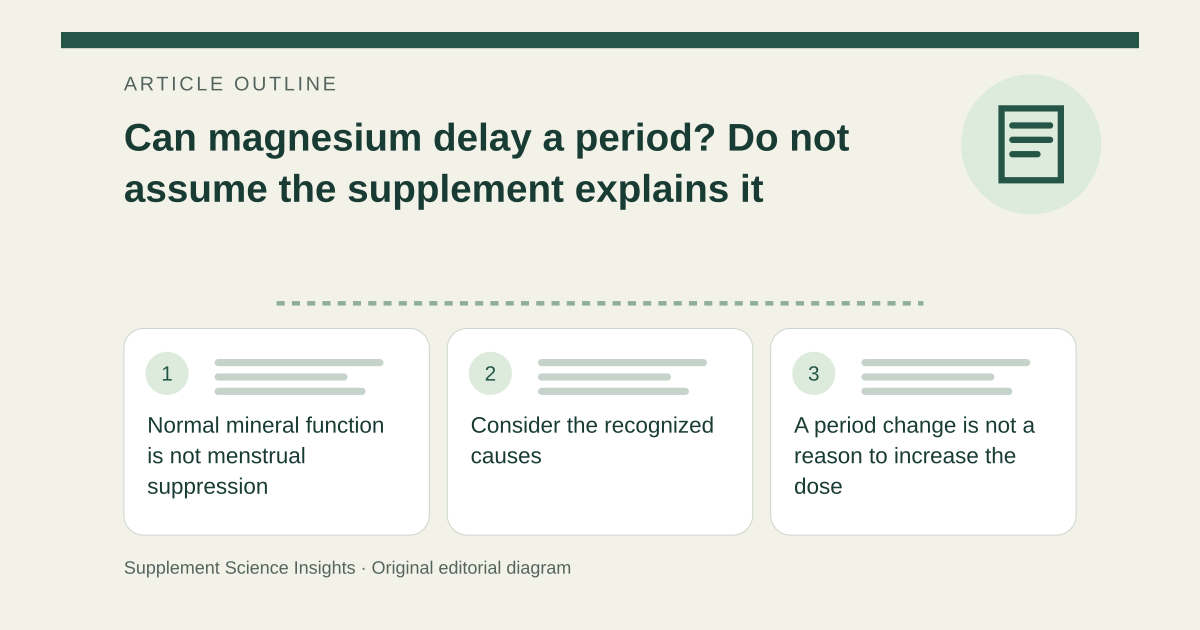
Normal mineral function is not menstrual suppression
Magnesium supports nerve, muscle and enzyme functions. That role does not establish that a supplement delays ovulation or bleeding. Research or marketing about menstrual discomfort should not be treated as evidence that magnesium predictably changes cycle timing. [1]
Consider the recognized causes
NHS lists pregnancy, stress, weight changes, too much exercise, hormonal contraception, breastfeeding and perimenopause among causes of missed or late periods. A supplement may be started during one of those broader changes, making timing alone an unreliable explanation. [2]
A period change is not a reason to increase the dose
Taking more magnesium to make a period arrive is not supported by the inspected sources. Higher supplemental intake can cause gastrointestinal effects, and kidney impairment raises toxicity risk. A late period should not be managed as a mineral-dose experiment. [1][2]
Know when to seek assessment
NHS recommends review when three periods are missed in a row, cycles become irregular, or a missed period accompanies other symptoms such as weight change or tiredness. Consider possible pregnancy promptly and discuss the complete medicine and supplement history. [2]
Keep a complete timeline
Imagine a cycle becomes late after magnesium is started during intensive training and weight loss. Record cycle dates and all changes for the clinician. The sequence does not establish magnesium as the cause. [2]
| Detail | Why record it? |
|---|---|
| Pregnancy possibility | Separate explanation to assess |
| Cycle dates | Shows the pattern |
| Training, stress and weight | Recognized relevant context |
| Supplement dose | Part of the history, not a diagnosis |
Sources for this article
- Magnesium - Health Professional Fact Sheet
Source consulted: 2026-09-21. This is a reference resource, not a claim that we conducted the studies or tested a product. - Missed or late periods - NHS
Source consulted: 2026-09-21. This is a reference resource, not a claim that we conducted the studies or tested a product.