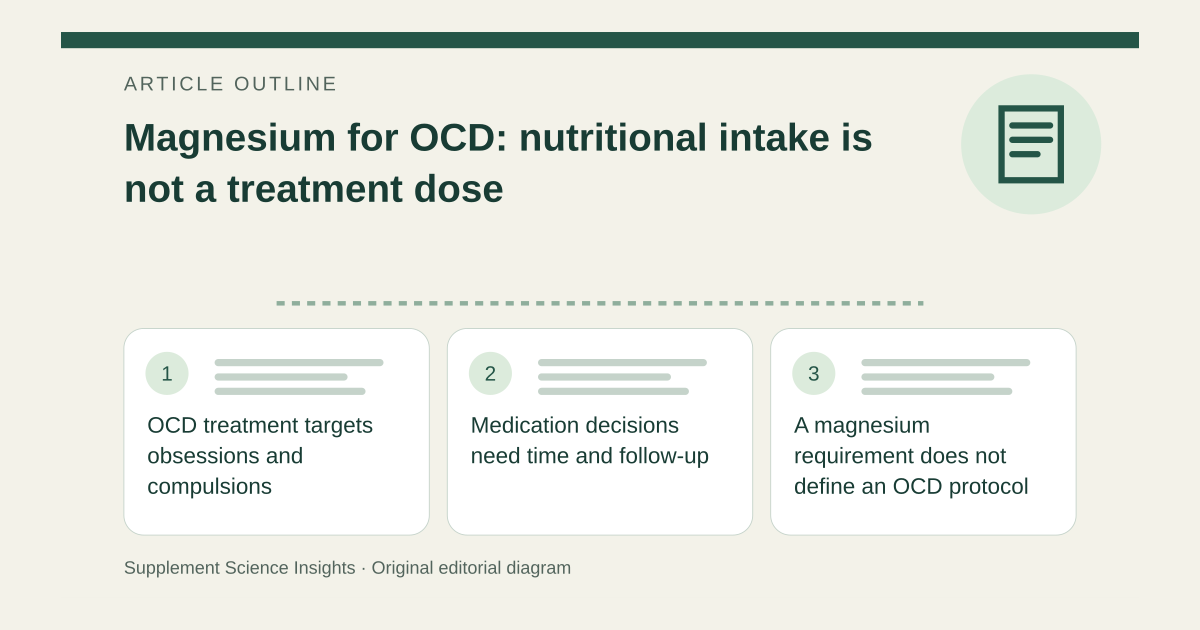
OCD treatment targets obsessions and compulsions
Exposure and response prevention helps a person face feared situations without carrying out the usual compulsive response. This is a specific treatment approach, not something that can be replaced by assuming a calming supplement addresses the same process. [1]
Medication decisions need time and follow-up
NHS describes SSRIs as a main medication option and notes that benefit can take up to twelve weeks. Do not stop prescribed treatment abruptly or replace it with magnesium. Persistent symptoms are a reason to review the treatment plan with the clinician. [1]
A magnesium requirement does not define an OCD protocol
Dietary magnesium supports normal body functions, but daily intake guidance is not evidence of an OCD treatment dose. Supplements can cause diarrhea and other adverse effects; kidney disease increases concern about accumulation. A deficiency should be addressed on its own merits. [2]
Separate two questions at the appointment
Imagine someone has OCD and worries their diet is low in magnesium. Ask both whether nutritional assessment is needed and whether OCD treatment is working. Correcting the first problem does not establish that therapy or medication is no longer needed. [2][1]
| Situation | Relevant next step |
|---|---|
| Low dietary intake | Assess nutritional adequacy |
| Ongoing compulsions | Review evidence-based OCD treatment |
| Considering a high-dose powder | Discuss risks and the intended outcome |
Sources for this article
- Treatment - Obsessive compulsive disorder (OCD) - NHS
Source consulted: 2026-09-20. This is a reference resource, not a claim that we conducted the studies or tested a product. - Magnesium - Health Professional Fact Sheet
Source consulted: 2026-09-20. This is a reference resource, not a claim that we conducted the studies or tested a product.