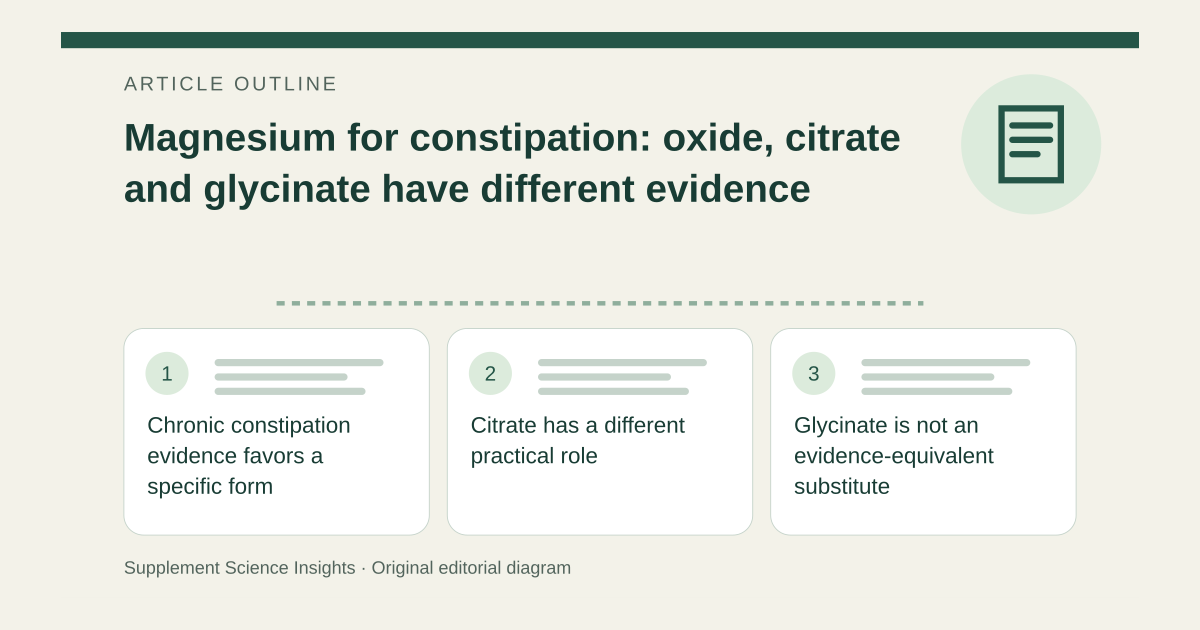
Chronic constipation evidence favors a specific form
The joint AGA–ACG guideline suggests magnesium oxide for adult chronic idiopathic constipation, with very low certainty of evidence. It advises starting lower and adjusting as needed, and avoiding use in renal insufficiency. This is a qualified recommendation for a defined condition, not a ranking for every person with difficult bowel movements. [1]
Citrate has a different practical role
MedlinePlus describes magnesium citrate as a saline laxative for occasional constipation. Follow the exact product’s directions and duration limits. A bottled laxative is not interchangeable with a nutritional magnesium capsule, and recurring need warrants review rather than indefinite self-treatment. [2]
Glycinate is not an evidence-equivalent substitute
The guideline notes that the efficacy of other magnesium forms, including citrate and glycinate, for chronic idiopathic constipation was unknown in its evidence review. That does not mean they can never loosen stools. It means the oxide recommendation cannot be transferred simply because all contain magnesium. [1]
Dose depends on product, purpose and health status
Imagine replacing an oxide tablet with a citrate drink using only the front-label milligram number. Compound mass, elemental magnesium and liquid volume describe different quantities. Use the exact label or clinician’s regimen; get advice before use with kidney disease, abdominal pain, nausea or vomiting. [3][2]
| Situation | Useful distinction |
|---|---|
| Magnesium oxide | Conditional adult chronic-constipation recommendation |
| Magnesium citrate | Product-specific occasional-laxative directions |
| Magnesium glycinate | Do not assume equivalent constipation evidence |
How does the evidence compare with polyethylene glycol?
The 2023 AGA/ACG guideline recommends polyethylene glycol (PEG) for adults with chronic idiopathic constipation with a strong recommendation and moderate-certainty evidence. It suggests magnesium oxide conditionally, with very-low-certainty evidence. Those are different levels of confidence and recommendation strength, not a finding from a direct PEG-versus-magnesium trial. [1]
The guideline evaluated drugs separately against placebo and was not designed to establish their relative efficacy. Magnesium-oxide trials were short, while the guideline notes PEG responses lasting six months in the evidence it reviewed. It advises avoiding magnesium oxide in renal insufficiency because magnesium can accumulate. These recommendations concern adult chronic idiopathic constipation, not every cause of constipation or an instruction to exchange products by milligram count. [1]
Sources for this article
- American Gastroenterological Association-American College of Gastroenterology Clinical Practice Guideline: Pharmacological Management of Chronic Idiopathic Constipation - PMC
Source consulted: 2026-09-20. This is a reference resource, not a claim that we conducted the studies or tested a product. - Magnesium Citrate: MedlinePlus Drug Information
Source consulted: 2026-09-20. This is a reference resource, not a claim that we conducted the studies or tested a product. - DailyMed - MAGNESIUM CITRATE SALINE LAXATIVE - LEMON FLAVOR- magnesium citrate solution
Source consulted: 2026-09-20. This is a reference resource, not a claim that we conducted the studies or tested a product.