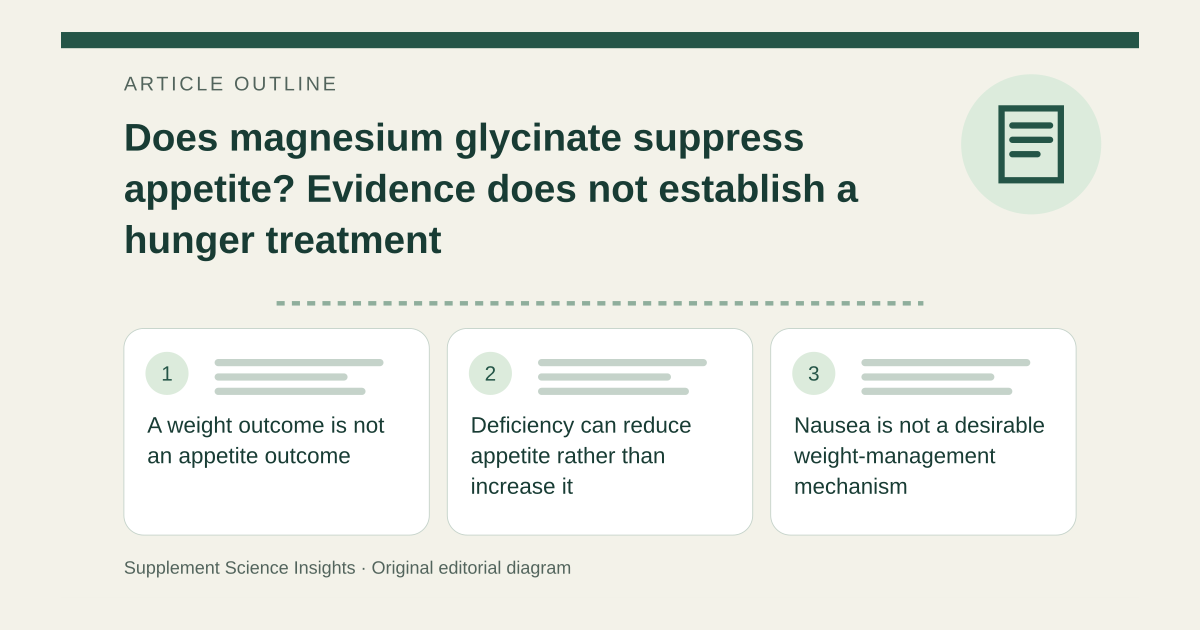
A weight outcome is not an appetite outcome
A 2026 review found a modest average reduction in body weight across magnesium trials, while body fat percentage and BMI did not significantly change overall. That finding does not establish appetite suppression, and it cannot automatically be attributed to every glycinate product. [1]
Deficiency can reduce appetite rather than increase it
NIH includes loss of appetite among early magnesium-deficiency symptoms. This does not mean that everyone with poor appetite is deficient, or that taking extra magnesium will deliberately suppress hunger. Nutrient adequacy and weight-control treatment are different goals. [2]
Nausea is not a desirable weight-management mechanism
Higher supplemental magnesium exposure can cause nausea, cramps or diarrhea. If a product makes eating unpleasant, that is a tolerability problem to review, not evidence that it is a safe appetite-regulating treatment. [2]
Glycinate does not establish a special appetite dose
The inspected review does not identify an optimal glycinate regimen for hunger control. Increasing elemental magnesium to chase an appetite effect raises adverse-effect concerns, particularly with impaired kidney function. [1][2]
Unexplained appetite and weight changes deserve assessment
Imagine someone eats less after starting a supplement but also has persistent nausea and unintentional weight loss. NHS recommends assessment of unexplained ongoing weight loss. Do not assume the product is delivering a beneficial appetite effect. [3][2]
| Claim | Missing distinction |
|---|---|
| Lower average body weight | Not proof of reduced hunger |
| Glycinate label | Not a validated appetite regimen |
| Eating less because of nausea | Possible adverse effect |
| Unintentional weight loss | Needs assessment |
Sources for this article
- Comprehensive Effects of Magnesium Supplementation on Cardiometabolic Risk Factors: A Systematic Review and Dose–Response Meta-Analysis - PMC
Source consulted: 2026-09-21. This is a reference resource, not a claim that we conducted the studies or tested a product. - Magnesium - Health Professional Fact Sheet
Source consulted: 2026-09-21. This is a reference resource, not a claim that we conducted the studies or tested a product. - Unintentional weight loss - NHS
Source consulted: 2026-09-21. This is a reference resource, not a claim that we conducted the studies or tested a product.