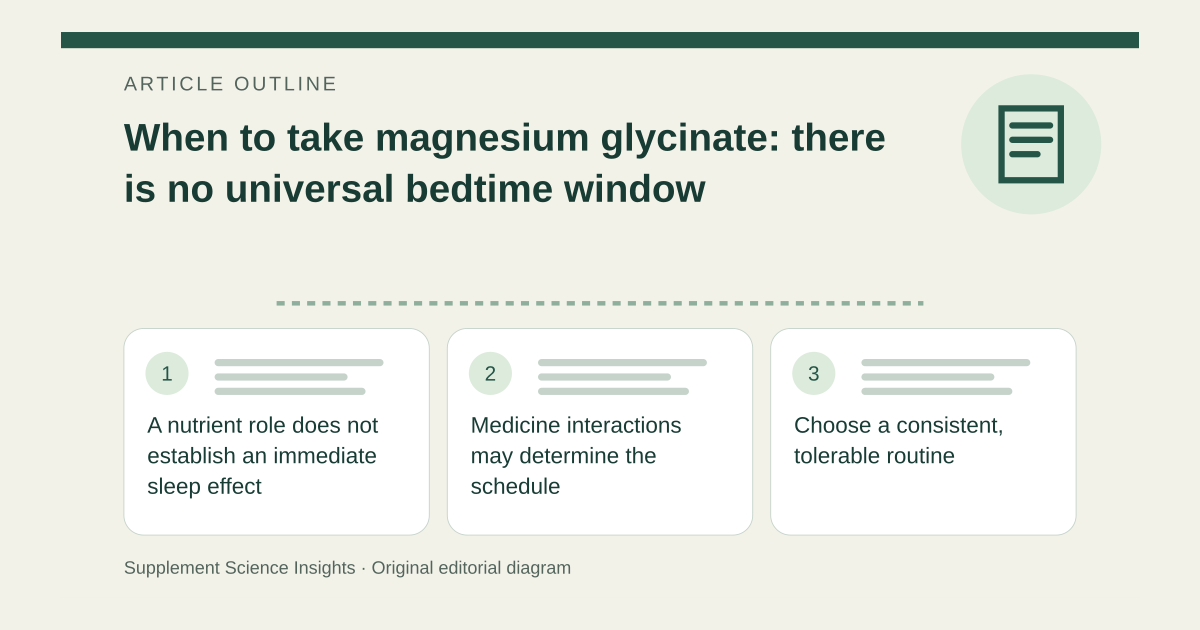
A nutrient role does not establish an immediate sleep effect
Magnesium is involved in normal physiological processes, but a capsule is not thereby proven to act as a timed sedative. The cited ODS overview does not specify a universal bedtime interval for glycinate. A nighttime routine can be convenient without being a demonstrated requirement for benefit. [1]
Medicine interactions may determine the schedule
Magnesium can reduce absorption of certain medicines, including some antibiotics and oral bisphosphonates. The interval is drug-specific, so fit magnesium around the medicine instructions with a pharmacist’s help. A convenient bedtime serving should not override those requirements. [1]
Choose a consistent, tolerable routine
Imagine taking a serving late at night causes digestive discomfort. Review the amount and directions rather than assuming earlier use would be ineffective. If sleep problems persist, investigate their cause instead of escalating the magnesium dose or repeatedly moving it by a few minutes. [1][2]
| Example | Interpretation |
|---|---|
| Bedtime preference | Convenience, not universal proof |
| Interacting medicine | May determine spacing |
| Persistent sleep problem | Needs more than timing adjustments |
Sources for this article
- Magnesium - Health Professional Fact Sheet
Source consulted: 2026-09-20. This is a reference resource, not a claim that we conducted the studies or tested a product. - Dietary Supplements: What You Need to Know
Source consulted: 2026-09-20. This is a reference resource, not a claim that we conducted the studies or tested a product.