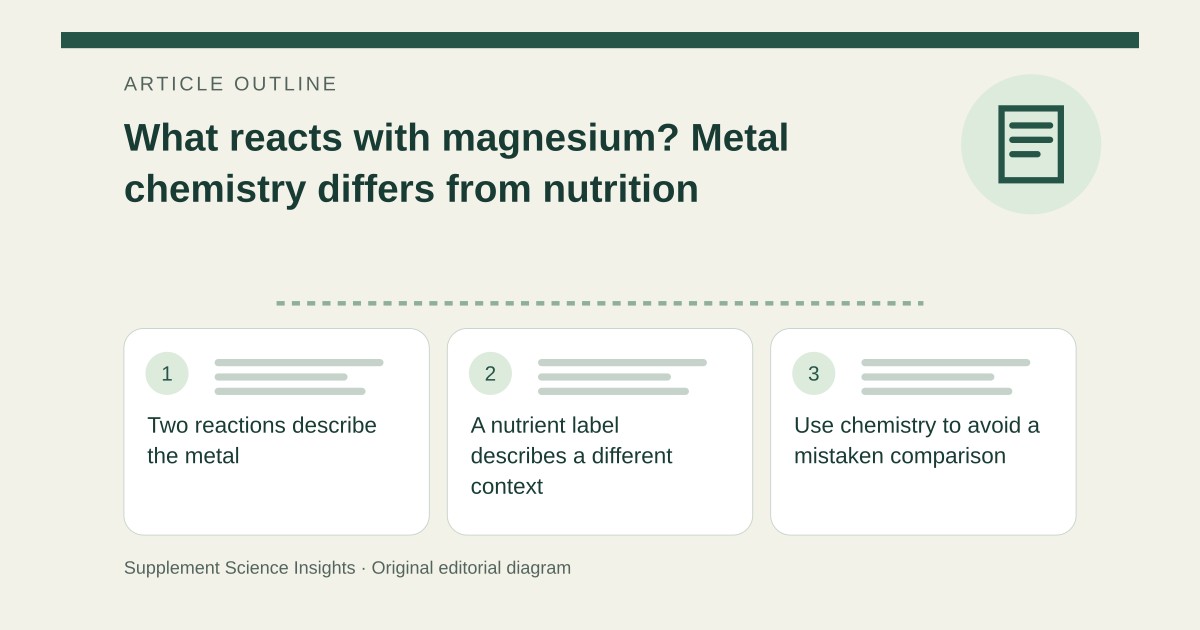
Two reactions describe the metal
RSC explains that magnesium reacts with oxygen to form magnesium oxide: 2Mg+O2→2MgO. With hydrochloric acid, the equation is Mg+2HCl→MgCl2+H2. These equations identify reactants and products; they are not instructions for making an ingestible supplement. [1][2]
A nutrient label describes a different context
Magnesium supports many enzyme systems and normal muscle and nerve function. Supplement labels report elemental magnesium amounts supplied by forms such as salts or chelates. The word elemental in that accounting does not mean the capsule contains a piece of reactive magnesium metal. [3]
Use chemistry to avoid a mistaken comparison
Imagine a video showing magnesium ribbon fizzing in acid beside a magnesium citrate bottle. The video cannot establish how much magnesium the supplement supplies, how well it is absorbed or whether it will treat symptoms. Use the product’s nutrient amount and evidence for its form and purpose. [2][3]
| Question | Distinction |
|---|---|
| Magnesium metal | Can undergo the illustrated metal reactions |
| Elemental amount on label | Nutrient accounting, not metal ribbon |
| Supplement suitability | Separate nutrition and safety question |
Sources for this article
- Conservation of mass: reacting magnesium and oxygen | Poster | RSC Education
Source consulted: 2026-09-20. This is a reference resource, not a claim that we conducted the studies or tested a product. - The rate of reaction of magnesium with hydrochloric acid | Class experiment | RSC Education
Source consulted: 2026-09-20. This is a reference resource, not a claim that we conducted the studies or tested a product. - Magnesium - Health Professional Fact Sheet
Source consulted: 2026-09-20. This is a reference resource, not a claim that we conducted the studies or tested a product.