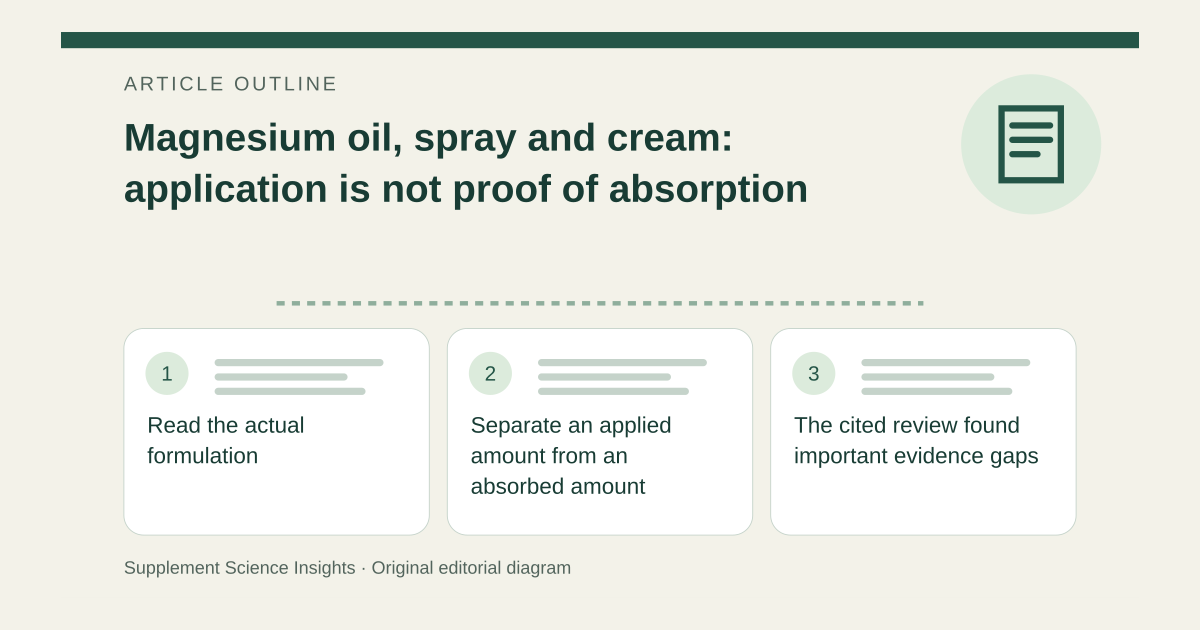
Read the actual formulation
The inspected BetterYou original spray lists water and magnesium chloride hexahydrate. Creams can contain additional moisturizers, fragrances or other ingredients. A pleasant skin feel or a source name does not establish systemic magnesium delivery, and oral and external-use products are not interchangeable. [1][2]
Separate an applied amount from an absorbed amount
The manufacturer declares 200 mg magnesium per ten sprays for this particular product. That is a product declaration, not a measured blood uptake for each user. It cannot simply be added to dietary intake as though the same amount had been absorbed. [1][2]
The cited review found important evidence gaps
A 2017 narrative review concluded that evidence was insufficient to recommend transdermal magnesium in place of established replacement. It discussed small and methodologically limited studies. This older review does not prove that no magnesium ever crosses skin, nor does it establish a current exhaustive evidence assessment. Oral findings cannot automatically validate creams or sprays. [2]
Use the exact label, not a universal spray count
The inspected original-spray instructions specify five to ten sprays massaged onto the body, avoiding eyes and damaged skin; it is for external use only. Those are manufacturer directions for one formula, not a therapeutic dose validated for every condition. Concentrations and pumps differ. No universal frequency or leave-on duration that guarantees a clinical benefit is established by these sources. [1][2]
Tingling and itching are not a deficiency test
The manufacturer acknowledges skin sensations, but that does not establish that they measure magnesium need or uptake. Do not keep increasing application through irritation. NHS contact-dermatitis guidance emphasizes avoiding the triggering substance and seeking advice about persistent reactions. More frequent or concentrated use is not automatically safer or more effective. [1][3]
Do not replace needed assessment or treatment
Imagine a person with a low magnesium blood result switches to a spray because it feels soothing. That sensation does not show correction of the deficiency. Review the cause and an appropriate replacement plan with the clinician; a massage or moisturizing effect is a different outcome. [4][2]
| Observation | What remains unknown |
|---|---|
| 200 mg declared per application | How much reaches circulation |
| Skin feels soothed | Whether a deficiency is corrected |
| Tingling after use | Not a validated deficiency measurement |
Sources for this article
- Magnesium Oil Original Spray | BetterYou – BetterYou USA
Source consulted: 2026-09-21. This is a reference resource, not a claim that we conducted the studies or tested a product. - Myth or Reality—Transdermal Magnesium? - PMC
Source consulted: 2026-09-21. This is a reference resource, not a claim that we conducted the studies or tested a product. - Contact dermatitis - Treatment - NHS
Source consulted: 2026-09-21. This is a reference resource, not a claim that we conducted the studies or tested a product. - Magnesium - Health Professional Fact Sheet
Source consulted: 2026-09-21. This is a reference resource, not a claim that we conducted the studies or tested a product.