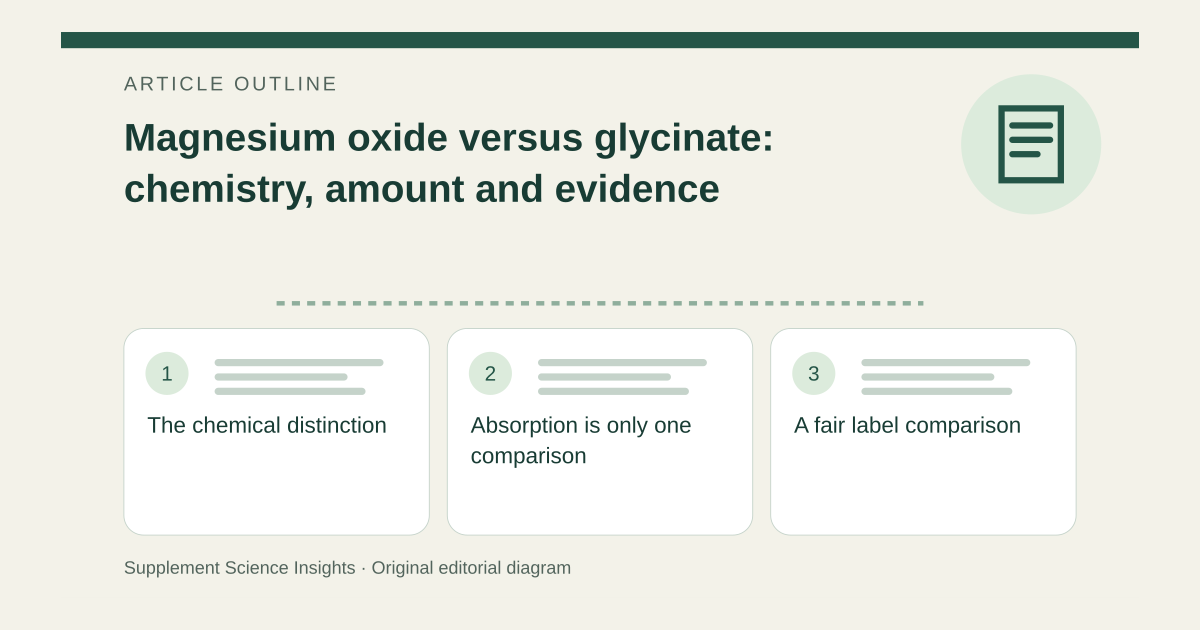
The chemical distinction
Magnesium oxide has the formula MgO. Magnesium glycinate combines magnesium with glycinate, derived from glycine. Compound weight therefore contains different proportions of magnesium. Comparing equal milligrams of whole compounds is not the same as comparing equal elemental-magnesium servings. [1][2]
Absorption is only one comparison
ODS reports that certain soluble magnesium forms are absorbed more completely than oxide, but this does not provide a definitive oxide-versus-glycinate ranking for every condition. Better absorption would also not automatically prove better sleep, anxiety or pain outcomes. Consider tolerability, cost, amount, other ingredients and the reason for use. [3]
A fair label comparison
Imagine two Supplement Facts panels each declare 100 mg magnesium, one as oxide and one as glycinate. They supply the same declared elemental amount, despite different compound masses. If one label instead advertises only the whole glycinate compound weight, resolve that ambiguity before comparing. Neither name removes kidney-related cautions or the general nonfood upper limit. [3]
| Hypothetical comparison | What is equal |
|---|---|
| 100 mg magnesium as oxide | Elemental magnesium amount |
| 100 mg magnesium as glycinate | Same declared elemental amount |
| 100 mg whole compound of each | Not necessarily equal magnesium |
Sources for this article
- PubChem: Magnesium Oxide, CID14792
Source consulted: 2026-09-20. This is a reference resource, not a claim that we conducted the studies or tested a product. - PubChem: Magnesium Glycinate, CID84645
Source consulted: 2026-09-20. This is a reference resource, not a claim that we conducted the studies or tested a product. - Magnesium - Health Professional Fact Sheet
Source consulted: 2026-09-20. This is a reference resource, not a claim that we conducted the studies or tested a product.