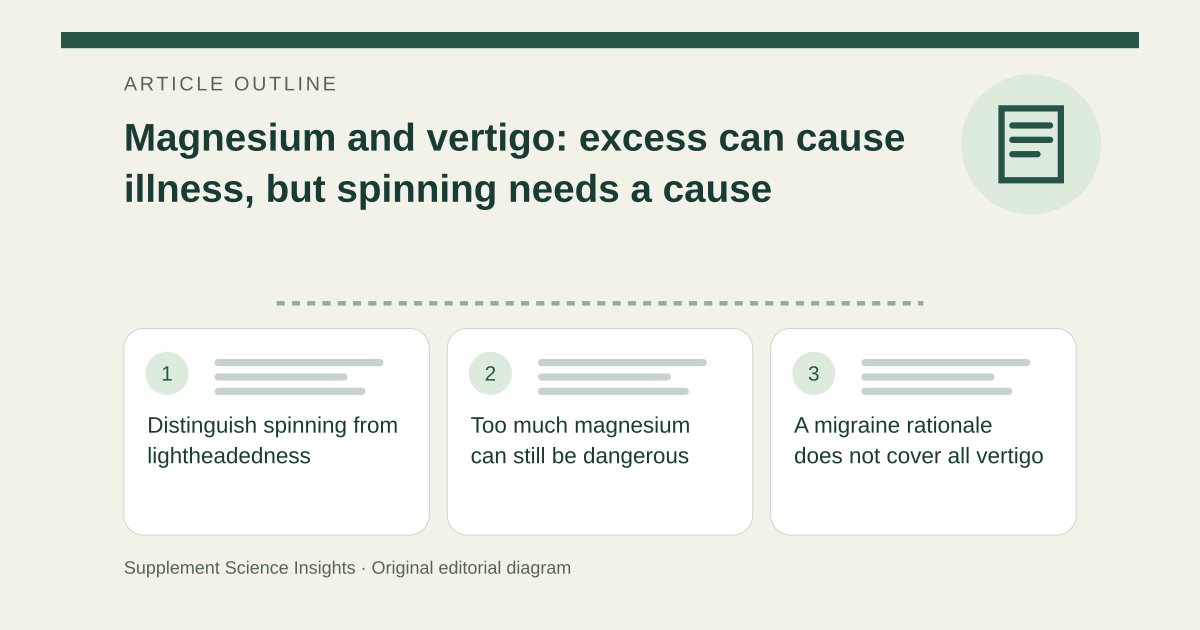
Distinguish spinning from lightheadedness
NHS describes vertigo as a feeling that you or your surroundings are spinning. Inner-ear conditions such as benign paroxysmal positional vertigo, labyrinthitis, vestibular neuritis and Meniere disease are possible causes; migraine and some medicines can also be relevant. [1]
Too much magnesium can still be dangerous
Serious excess may cause low blood pressure, weakness, breathing problems or an irregular heartbeat, especially with impaired kidney function. These effects can make a person feel unwell or lightheaded. They do not establish that every spinning sensation after a dose is magnesium toxicity. [2][1]
A migraine rationale does not cover all vertigo
Evidence about magnesium in migraine prevention cannot automatically be extended to all vestibular symptoms. A positional inner-ear problem and migraine-associated symptoms need different diagnostic consideration. The inspected NHS guidance does not describe magnesium as a universal vertigo remedy. [2][1]
Treatment follows the cause
Depending on the diagnosis, care may involve balance exercises, other treatments or management of the underlying condition. Recurrent or persistent vertigo warrants assessment. Changing supplement forms repeatedly can delay finding a treatable cause. [1]
New neurological symptoms need urgent action
Vertigo with double vision or loss of vision, new hearing loss, difficulty speaking, or arm or leg weakness or numbness needs emergency assessment. Imagine spinning starts after a high-dose laxative: bring the product and timing for assessment, but do not assume that timing rules out another urgent cause. [1][2]
| Detail | Clinical relevance |
|---|---|
| Spinning versus faint feeling | Helps characterize the symptom |
| Dose and kidney function | Relevant to possible magnesium excess |
| Position or migraine context | May inform the cause |
| New neurological changes | Emergency assessment |
Sources for this article
- Vertigo - NHS
Source consulted: 2026-09-21. This is a reference resource, not a claim that we conducted the studies or tested a product. - Magnesium - Health Professional Fact Sheet
Source consulted: 2026-09-21. This is a reference resource, not a claim that we conducted the studies or tested a product.