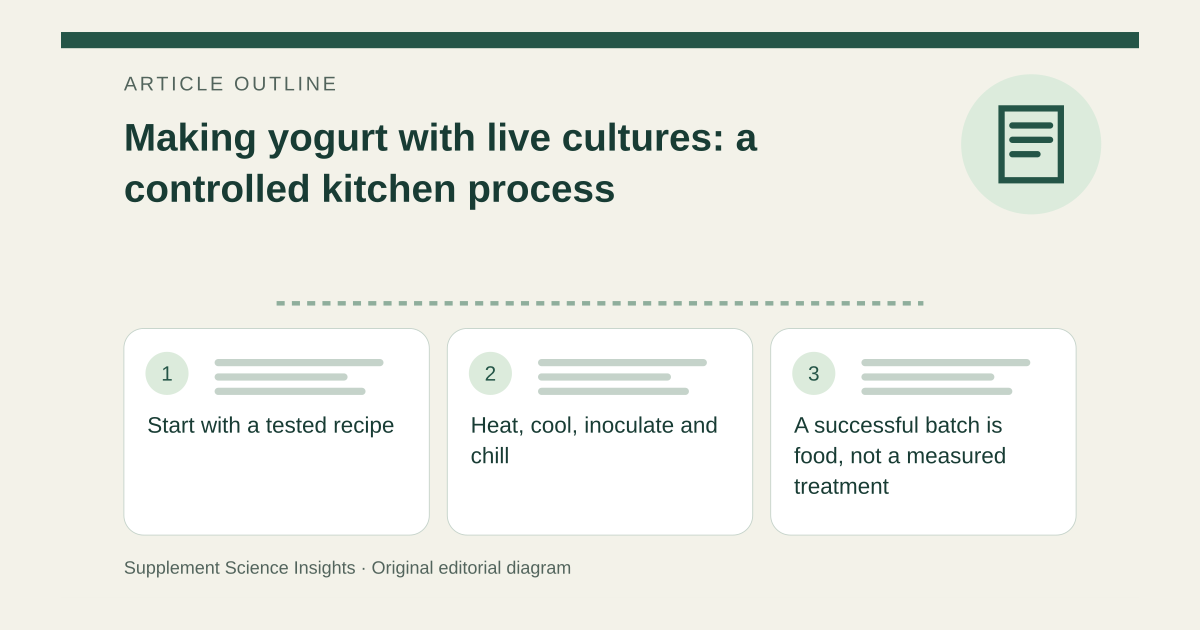
Start with a tested recipe
The University of Alaska Fairbanks method uses pasteurized dairy milk, plain live-culture yogurt or a specified dry starter, clean equipment and a thermometer. Its one-quart version uses one-quarter cup yogurt starter and one-third cup nonfat dry milk powder. Follow the linked complete recipe rather than applying dairy instructions to plant beverages. [1]
Heat, cool, inoculate and chill
Heat the milk mixture to 185–200°F and hold 10–20 minutes, then cool promptly to 112–115°F. Mix starter with some warm milk before combining; the mixture should be 110–112°F. Incubate covered at 110°F, within 5°F, for 4–7 hours until set, then refrigerate promptly at 40°F or colder. Do not add the starter to hot milk or keep extending an unsuccessful incubation. [1]
A successful batch is food, not a measured treatment
Discard a batch that fails to set properly or develops unusual growth or odor. A kitchen batch does not establish a specific probiotic dose. Imagine using a supplement capsule instead of the specified starter: its label does not demonstrate that it will acidify this milk safely, so use the food recipe and starter instead. [1][2]
| Situation | Interpretation |
|---|---|
| Specified starter and temperature | Follow the complete tested method |
| Batch fails to set | Discard rather than prolong indefinitely |
| Unknown capsule starter | Not an equivalent food culture |
Sources for this article
- Making Yogurt at Home | Cooperative Extension Service
Source consulted: 2026-09-20. This is a reference resource, not a claim that we conducted the studies or tested a product. - Probiotics - Health Professional Fact Sheet
Source consulted: 2026-09-20. This is a reference resource, not a claim that we conducted the studies or tested a product.