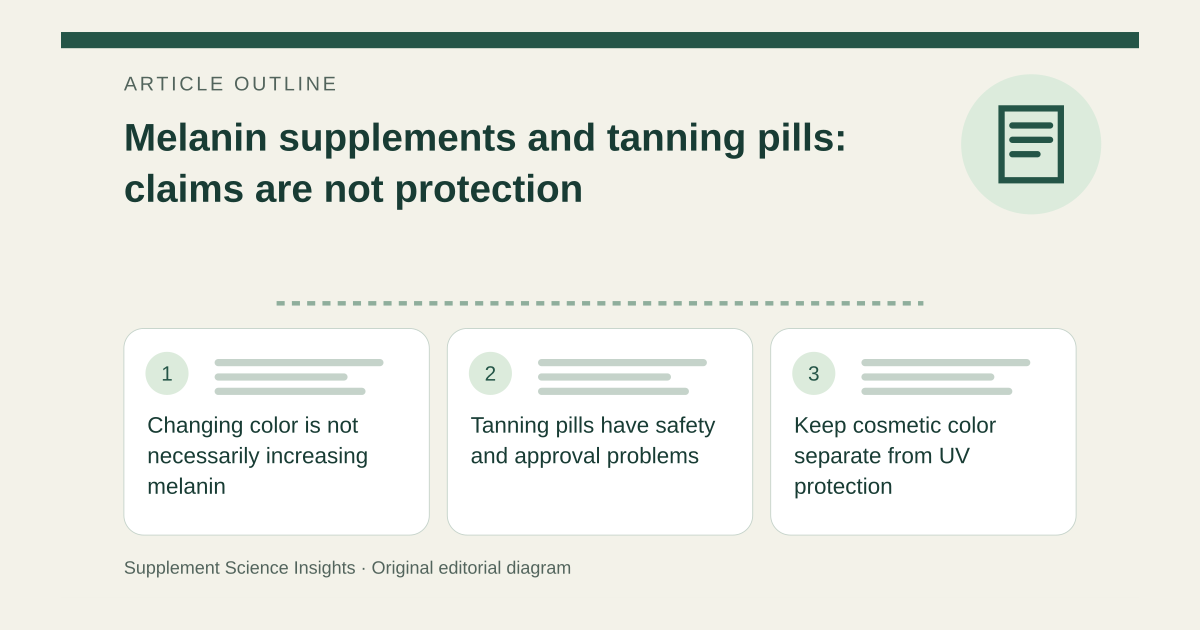
Changing color is not necessarily increasing melanin
FDA explains that canthaxanthin-containing tanning pills can color skin through pigment deposition rather than an increase in melanin. That distinction matters: a color change alone cannot establish a biological tanning effect or sun protection. [1]
Tanning pills have safety and approval problems
FDA states that tanning pills are unsafe and none are FDA-approved. It describes harms including pigment-related eye deposits with canthaxanthin. This warning is not a basis for choosing a different unverified melanin-boosting pill; inspect the exact ingredient instead of relying on the marketing category. [2][1]
Keep cosmetic color separate from UV protection
Imagine a pill changes skin color and the user then skips sunscreen. The visible change does not supply an SPF rating. Continue broad-spectrum sunscreen, shade and protective clothing; do not use a supplement or tan as evidence that additional UV exposure is safe. [3][1]
| Concern | Useful distinction |
|---|---|
| Pigment deposition | Not necessarily more melanin |
| A tanning-pill claim | Not FDA approval |
| Darker appearance | Not a sunscreen rating |
Sources for this article
- Tanning Pills | FDA
Source consulted: 2026-09-20. This is a reference resource, not a claim that we conducted the studies or tested a product. - Tanning Products | FDA
Source consulted: 2026-09-20. This is a reference resource, not a claim that we conducted the studies or tested a product. - Sunscreen FAQs
Source consulted: 2026-09-20. This is a reference resource, not a claim that we conducted the studies or tested a product.