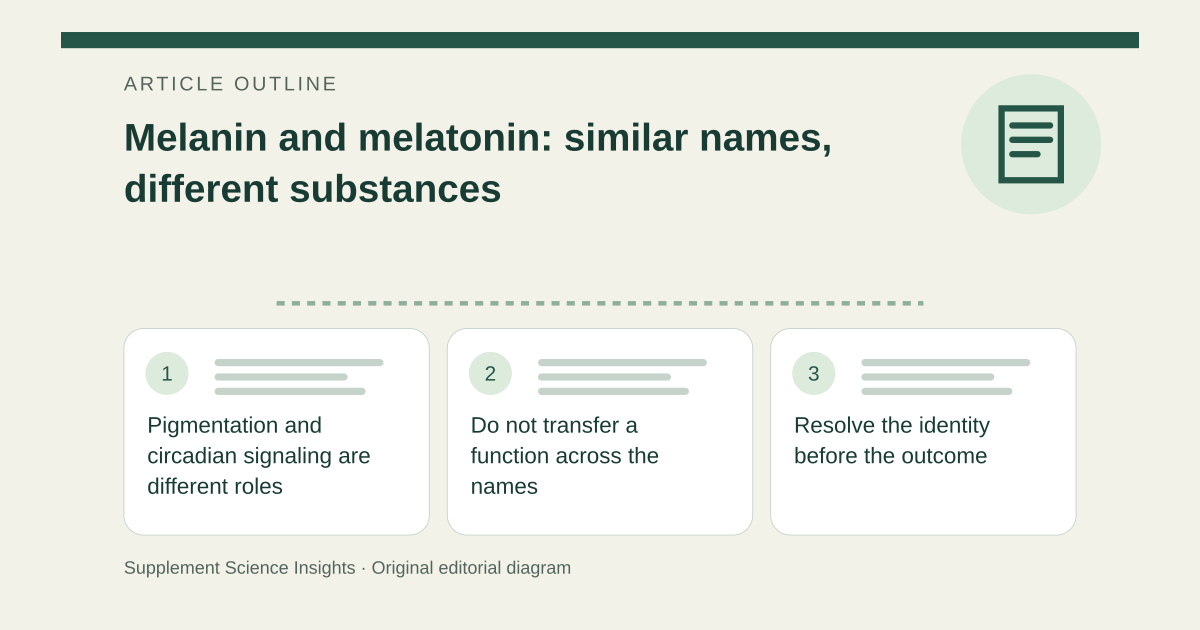
Pigmentation and circadian signaling are different roles
The National Cancer Institute describes melanin as the pigment giving color to skin and eyes and helping protect against ultraviolet damage. Endotext describes melatonin in the context of pineal physiology and daily biological rhythms. [1][2]
One name concerns pigmentation; the other concerns a signaling molecule. Confusing the spelling can lead to applying the wrong explanation to a product or health question. [1][2]
Do not transfer a function across the names
A statement about melanin does not establish an effect of a melatonin supplement on skin color. Likewise, pigmentation is not a substitute for measuring or understanding the melatonin rhythm. [1][2]
Check the actual substance in a source or ingredient list before interpreting a benefit claim. Similar words are not evidence of similar mechanisms or clinical effects. [1][2]
Resolve the identity before the outcome
Imagine an article about skin pigment is cited to support a sleep supplement. The shared letters in the names do not make that citation relevant.
| Detail | Interpretation |
|---|---|
| Melanin | Pigment |
| Melatonin | Hormonal timing signal |
| Similar spelling | Not interchangeable biology |
Sources for this article
- Definition of melanin - NCI Dictionary of Cancer Terms - NCI
Source consulted: 2026-09-18. This is a reference resource, not a claim that we conducted the studies or tested a product. - Physiology of the Pineal Gland and Melatonin - Endotext - NCBI Bookshelf
Source consulted: 2026-09-18. This is a reference resource, not a claim that we conducted the studies or tested a product.