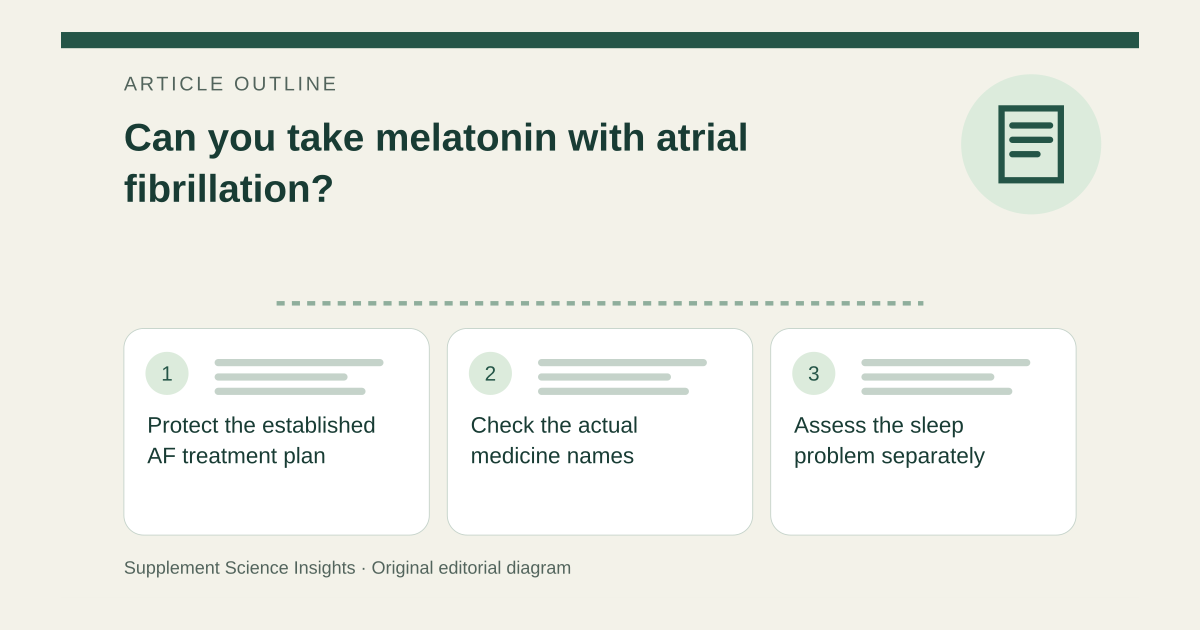
Protect the established AF treatment plan
NHS describes medicines to control heart rate or rhythm and anticoagulants to reduce clot and stroke risk. A sleep supplement does not serve these purposes. Do not stop or reduce AF medicines because sleep improves or a supplement is marketed as heart protective. [1]
Check the actual medicine names
NHS melatonin guidance flags warfarin and medicines that lower blood pressure for review. Not all anticoagulants are identical, so a warfarin warning should not be treated as a proven equal interaction with every alternative. Bring the complete medication list and melatonin label to a pharmacist. [2]
Assess the sleep problem separately
Melatonin has selected sleep uses, but evidence for chronic insomnia is limited and long-term safety is not fully established. A discussion of insomnia and other contributors is more useful than assuming any sleep aid is safe because it is available as a supplement. [3]
Do not dismiss new cardiac symptoms as a sleep-aid effect
Imagine an irregular heartbeat occurs with chest pain, breathlessness, faintness or new neurologic symptoms. NHS advises emergency help for such combinations. They require urgent assessment rather than waiting for melatonin to wear off. [1]
| Detail | Purpose |
|---|---|
| Rate or rhythm medicine | Maintain treatment |
| Anticoagulant name | Check the exact interaction |
| Sleep-product ingredients | Assess the whole formula |
| New serious symptoms | Urgent clinical assessment |
Sources for this article
- Atrial fibrillation - NHS
Source consulted: 2026-09-21. This is a reference resource, not a claim that we conducted the studies or tested a product. - Taking melatonin with other medicines and herbal supplements - NHS
Source consulted: 2026-09-21. This is a reference resource, not a claim that we conducted the studies or tested a product. - Melatonin: What You Need To Know | NCCIH
Source consulted: 2026-09-21. This is a reference resource, not a claim that we conducted the studies or tested a product.