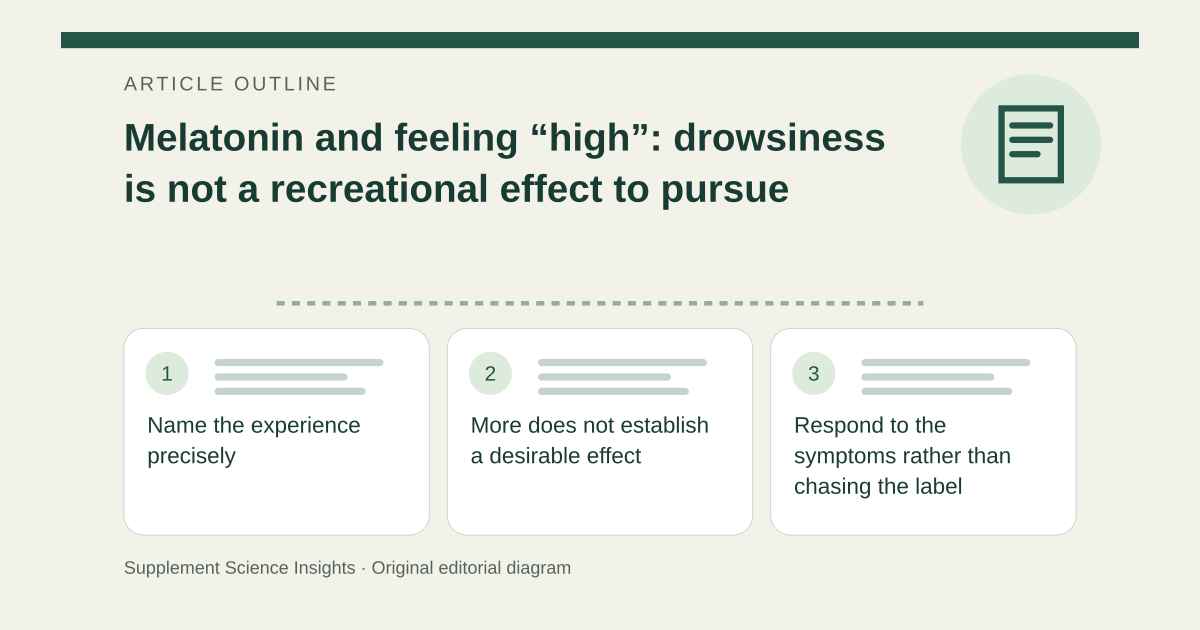
Name the experience precisely
Sleepiness, dizziness, unusual dreams and confusion are different experiences. NHS guidance lists adverse effects and warns against driving when alertness or coordination is affected. Calling all of these a high can hide the distinction between expected drowsiness and a symptom that needs medical assessment. [1][2]
More does not establish a desirable effect
The cited guidance does not support using melatonin to produce intoxication. A larger amount or a combination with alcohol or other sedating substances can increase impairment. NHS warns that some combinations can produce very deep sleep and difficulty waking; they should not be treated as ways to enhance the experience. [2][3]
Respond to the symptoms rather than chasing the label
Imagine a person feels confused and unsteady after a sleep product. Stop hazardous activities and seek medical advice, especially if more than directed was taken or other substances were involved. Someone who cannot be awakened normally or has breathing difficulty needs emergency help. Keep the product package available for responders. [1][4]
| Situation | Response or distinction |
|---|---|
| Drowsiness | Can impair function |
| Confusion or severe dizziness | Needs assessment |
| Unresponsive or breathing poorly | Emergency assistance |
Sources for this article
- Side effects of melatonin - NHS
Source consulted: 2026-09-20. This is a reference resource, not a claim that we conducted the studies or tested a product. - Common questions about melatonin - NHS
Source consulted: 2026-09-20. This is a reference resource, not a claim that we conducted the studies or tested a product. - Taking melatonin with other medicines and herbal supplements - NHS
Source consulted: 2026-09-20. This is a reference resource, not a claim that we conducted the studies or tested a product. - How and when to take melatonin - NHS
Source consulted: 2026-09-20. This is a reference resource, not a claim that we conducted the studies or tested a product.