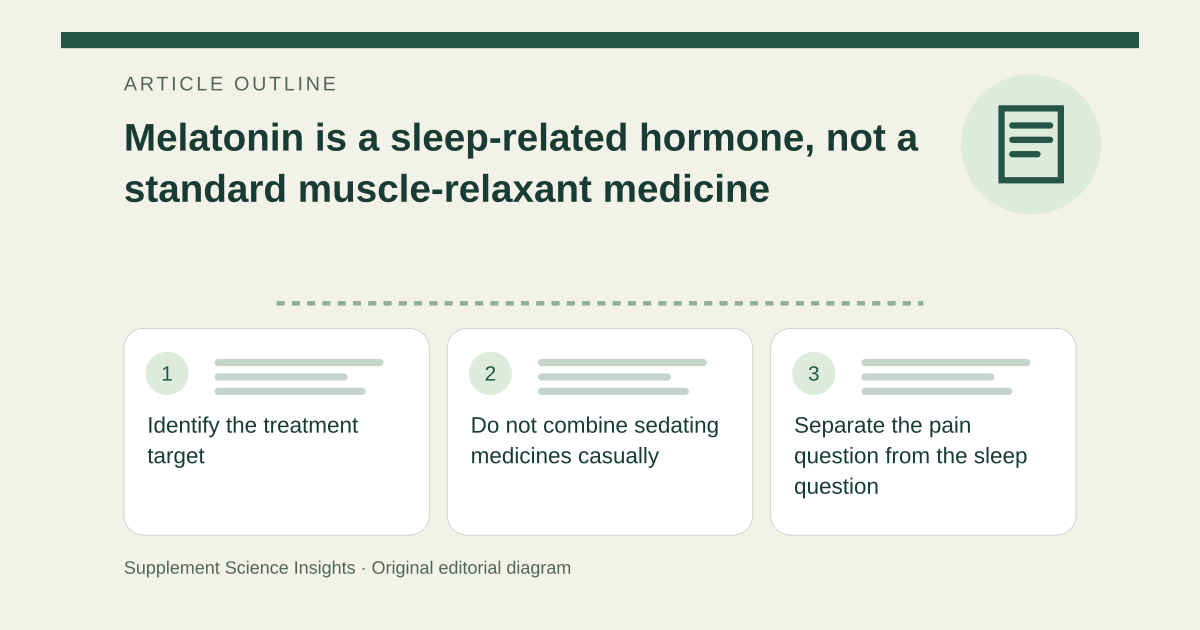
Identify the treatment target
Melatonin helps regulate sleep timing. NHS describes its use for particular sleep problems and jet lag, not as a general replacement for muscle-relaxant therapy. A medicine that causes drowsiness can feel relaxing without addressing the cause of a painful spasm or neurological muscle disorder. [1][2]
Do not combine sedating medicines casually
NHS interaction guidance includes medicines such as diazepam, which may be used for anxiety or muscle pain, and other agents that affect sedation. This is a reason for a pharmacist or prescriber to check the combination, not a suggestion that adding melatonin improves the muscle treatment. [3]
Separate the pain question from the sleep question
Imagine muscle pain is disturbing sleep. A sleep-related product may change drowsiness without treating the pain source. Describe both problems to the clinician and avoid replacing or adding to prescribed treatment on the basis of a shared relaxing sensation. [1][3]
| Situation | Response or distinction |
|---|---|
| Sleepiness | A possible melatonin effect |
| Muscle spasm | A different treatment question |
| Combined sedating medicines | Needs a regimen review |
Sources for this article
- Common questions about melatonin - NHS
Source consulted: 2026-09-20. This is a reference resource, not a claim that we conducted the studies or tested a product. - About melatonin - NHS
Source consulted: 2026-09-20. This is a reference resource, not a claim that we conducted the studies or tested a product. - Taking melatonin with other medicines and herbal supplements - NHS
Source consulted: 2026-09-20. This is a reference resource, not a claim that we conducted the studies or tested a product.