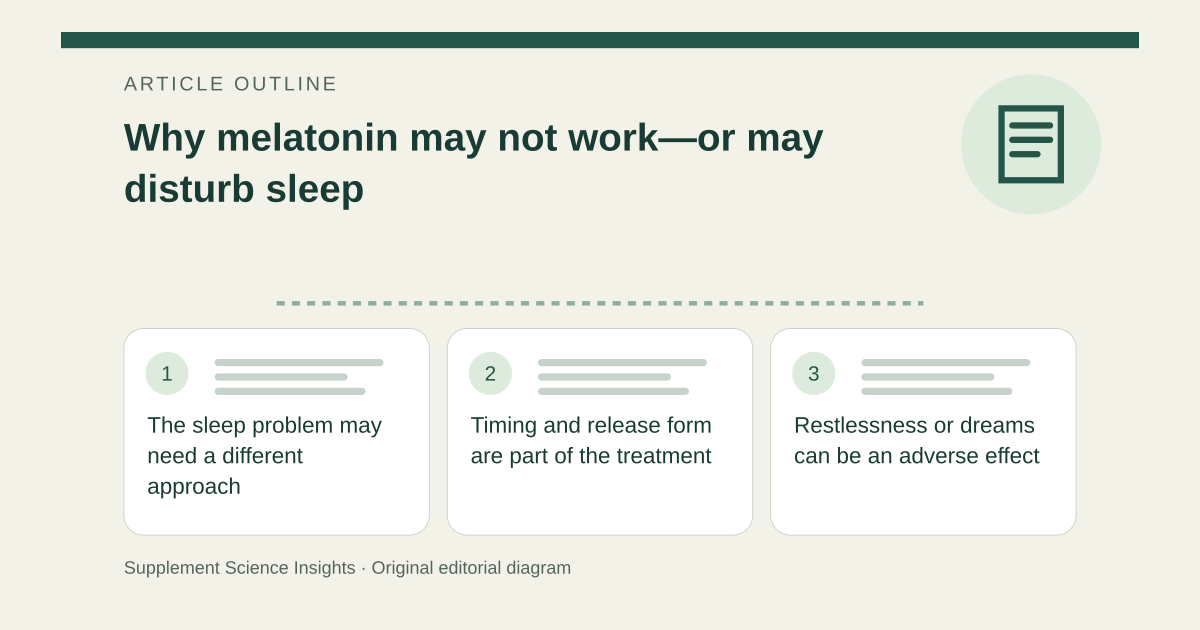
The sleep problem may need a different approach
NCCIH distinguishes circadian uses such as jet lag from chronic insomnia, for which evidence has not supported a routine melatonin recommendation. Cognitive behavioral therapy for insomnia is an established initial approach. Failure to respond does not prove that the body needs a much larger melatonin dose. [1]
Timing and release form are part of the treatment
NHS instructions differ for slow-release tablets and standard preparations, and for different indications. A bedtime gummy cannot be assumed to act like a prescribed sustained-release tablet. Review when the product is taken and what the formulation is intended to do. [2]
Restlessness or dreams can be an adverse effect
NHS guidance lists irritability, restlessness, strange dreams and night sweats among possible effects. Waking after melatonin does not prove one mechanism, but troublesome new symptoms warrant a review. If these effects persist, the NHS advises stopping the medicine and speaking with the doctor. [3]
Check the rest of the formula and medicine list
Other medicines can alter melatonin’s effects, and a blend may include additional sleep-inducing ingredients. Read the complete label and discuss the combination. Adding another sedative to compensate for poor sleep can increase risk without addressing the cause. [4][5]
Record the pattern before changing the plan
Imagine falling asleep improves but repeated awakenings continue. Note bedtime, product, timing, awakenings and next-day symptoms, then review the pattern with a clinician. The useful endpoint is better sleep and daytime function, not simply a stronger product. [1][5]
| Pattern | Question |
|---|---|
| No sleep improvement | Is this the right treatment target? |
| Restlessness or unusual dreams | Could this be an adverse effect? |
| Multiple sleep aids | Review combined exposure |
Sources for this article
- Melatonin: What You Need To Know | NCCIH
Source consulted: 2026-09-20. This is a reference resource, not a claim that we conducted the studies or tested a product. - How and when to take melatonin - NHS
Source consulted: 2026-09-20. This is a reference resource, not a claim that we conducted the studies or tested a product. - Side effects of melatonin - NHS
Source consulted: 2026-09-20. This is a reference resource, not a claim that we conducted the studies or tested a product. - Taking melatonin with other medicines and herbal supplements - NHS
Source consulted: 2026-09-20. This is a reference resource, not a claim that we conducted the studies or tested a product. - Dietary Supplements: What You Need to Know
Source consulted: 2026-09-20. This is a reference resource, not a claim that we conducted the studies or tested a product.